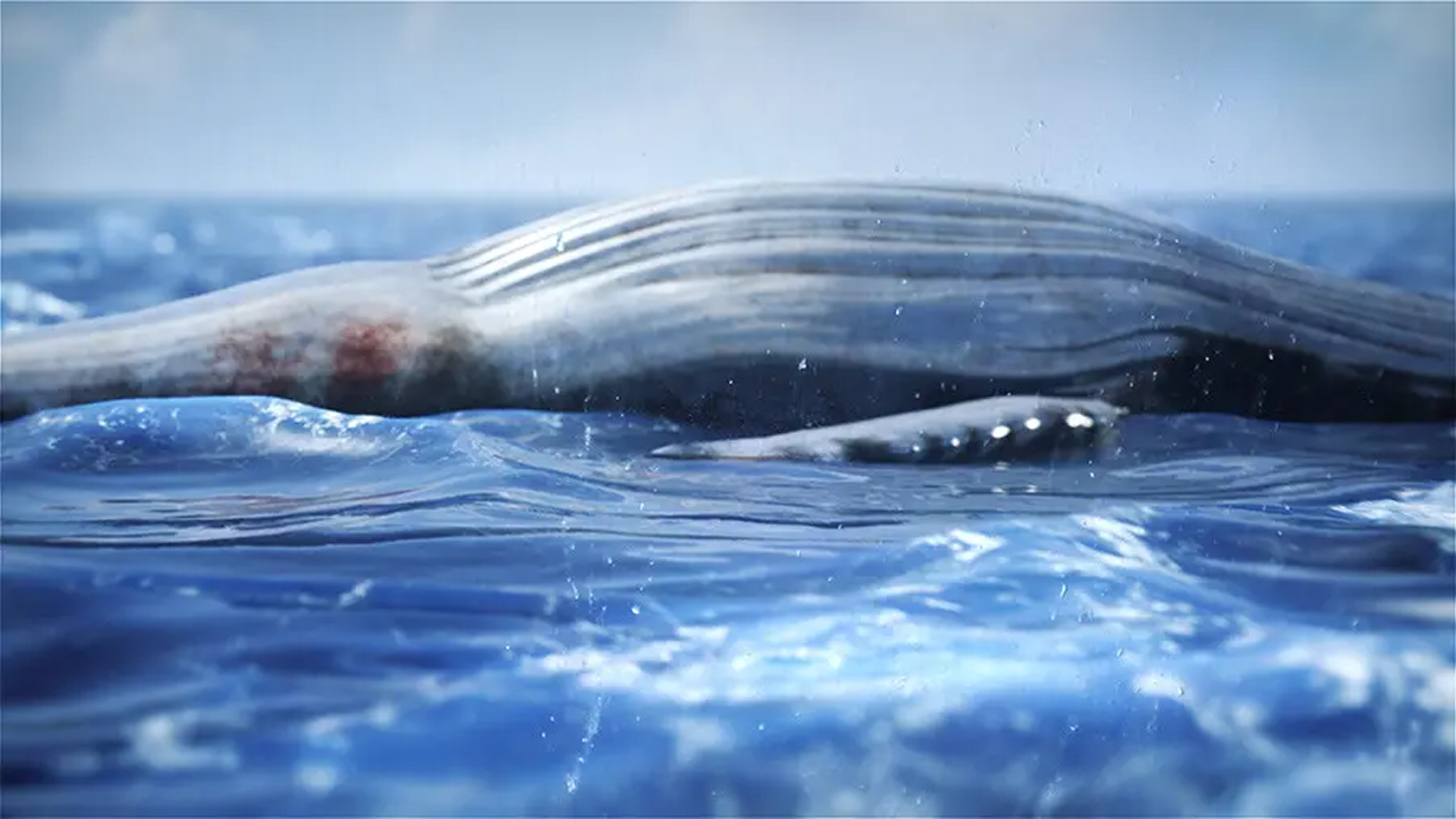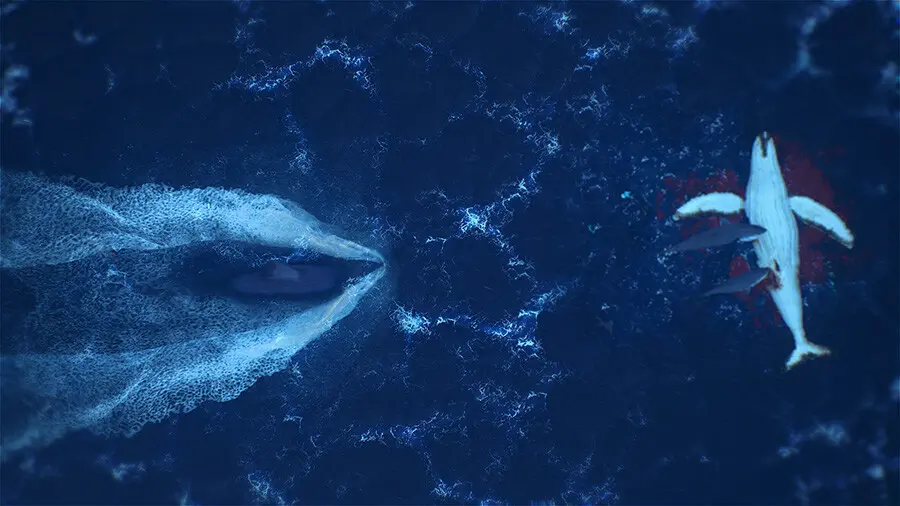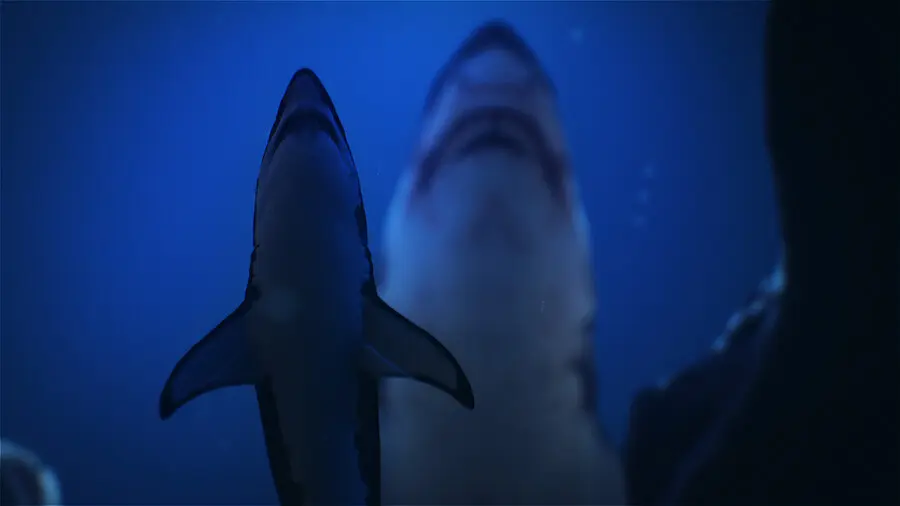
Pixeldust modeled and textured both predators from scratch, drawing on decades of creature work. Our modelers and texture artists sculpted every plate, fin and scar in Autodesk Maya and ZBrush, building a Megalodon and a great white real enough to hold up in extreme close-up.
Intricate animation rigs went straight to the animators, who used them to craft fluid, fish-like movement. Because the battle kept evolving, the team kept the rigs flexible throughout production, adjusting them and passing changes along quickly so the animation never had to wait.
The client asked for a fight that felt visceral, so the details carry the story: blood spatter in the water, scratch marks and battle scars, weathering on the skin and the aged wrinkles of an ancient Megalodon. Every wound was planned to read clearly as the two sharks circle and strike.
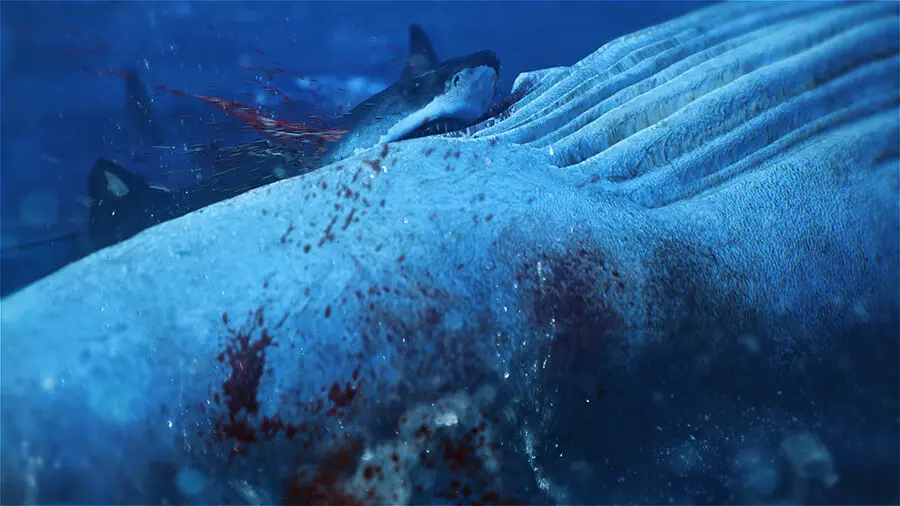
Hazmat Productions supplied the storyboards, and Pixeldust turned them into a dynamic sequence with camera moves that capture the fight from every angle. The team blocked the animation before any final animation or rendering, sharing rough cuts and Maya playblasts at each step so the client could approve the action before it was refined. It is the industry-standard way to keep a complex sequence moving smoothly toward the finish line.
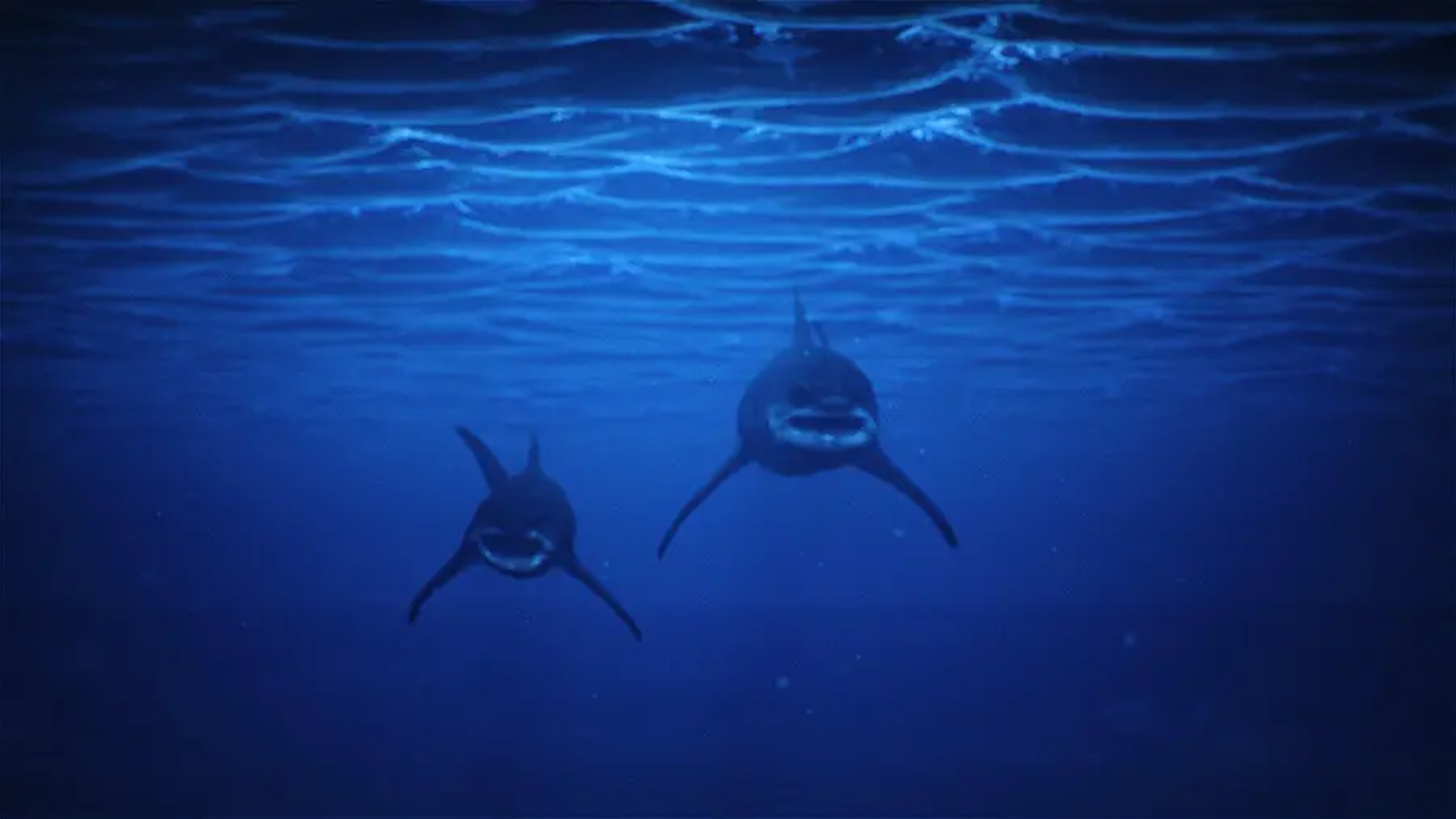
While the animators brought the creatures to life in Maya, our CG Supervisor ran a parallel pipeline in Unreal Engine, refining the look development, lighting and scenery. As shots were approved, the animation flowed into Unreal and came together with dynamics, weather, photorealistic shading and underwater lighting.
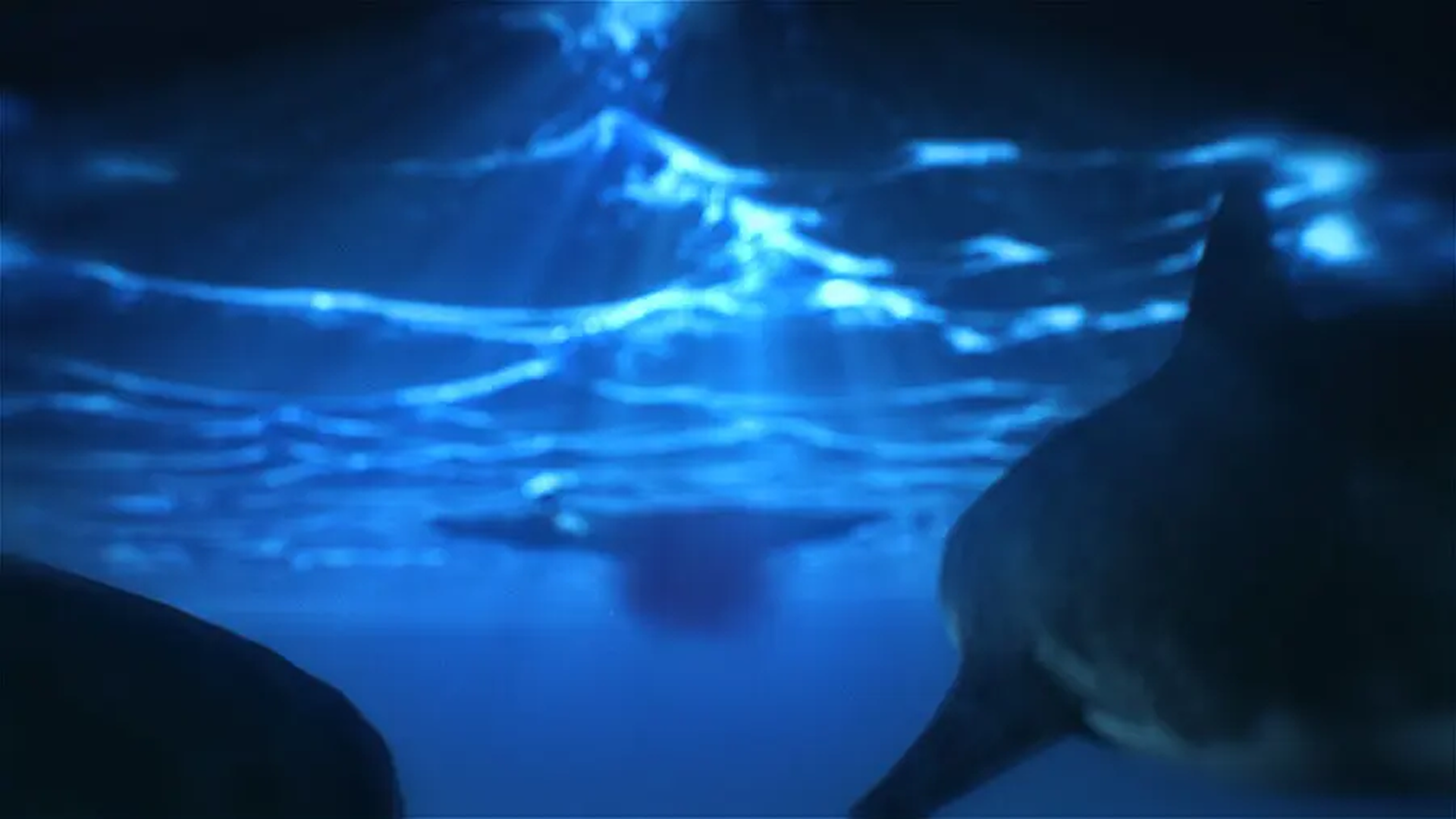
Pixeldust has spent more than five years evolving with real-time rendering, and the tight broadcast deadline made Unreal Engine 5.2 the right call. With twin pipelines for animation and look development, the project moved from first playblasts to final quality at remarkable speed, and the team could fine-tune fluid water dynamics, the ocean surface, particles and other underwater systems on the fly.
The biggest hurdle was delivering two distinct lighting scenarios on a tight schedule: a clear daylight look for the surface scenes and an underwater version for the depths. Final lighting was set in Unreal, with a touch of compositing and color correction in After Effects, and RTX rendering turned out the full one-minute sequence in 4K.