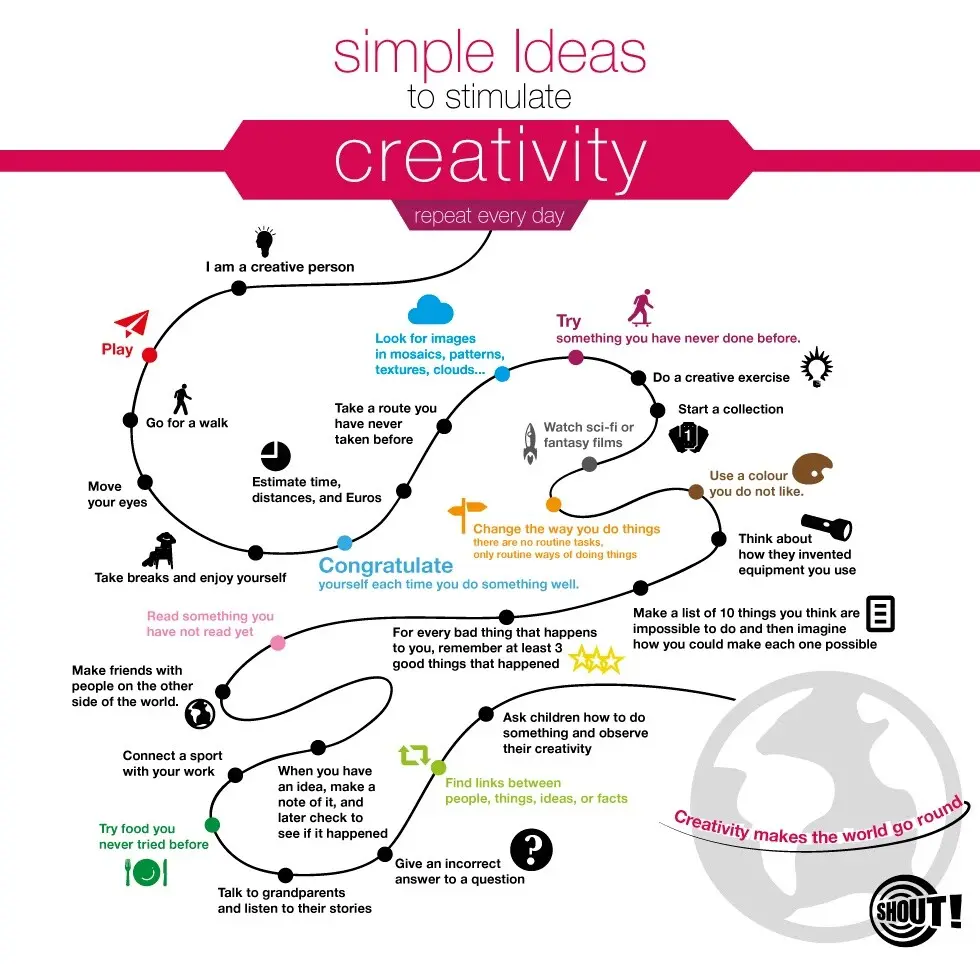
Creative output depends on creative input. Professionals who consume a diverse diet of visual art, music, literature, films, games, architecture, and experiences from outside their own discipline consistently produce more original and surprising work than those who only look at what their direct competitors are doing. In 2026, with AI-generated content flooding every channel, the creative work that stands out is work that draws from uniquely human sources of inspiration — lived experience, cultural knowledge, emotional intelligence, and cross-disciplinary connections that no algorithm can replicate.
Counterintuitively, constraints often fuel creativity rather than limiting it. A tight deadline, a restricted color palette, or an unusual client requirement can push you into creative territory you would never have explored otherwise. Similarly, creative failure — ideas that do not work, experiments that fall flat — is an essential part of the creative process, not a sign that something is wrong. The most innovative studios cultivate environments where calculated creative risks are encouraged and failure is treated as valuable information. At Pixeldust, we have found that our best creative breakthroughs often emerge from the most challenging constraints.