Step Inside the Story. Immersive Experiences That Captivate and Convert.
Pixeldust designs and develops augmented reality and virtual reality experiences that transport audiences into your content, turning passive viewers into active participants and creating moments they will never forget.
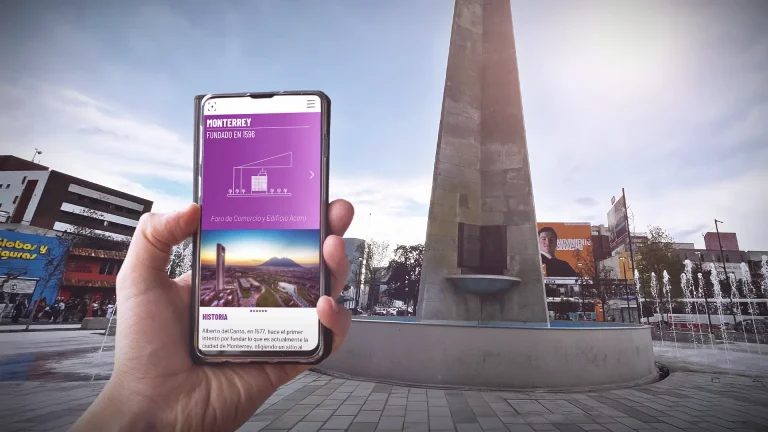
Work for Leidos, the Challenger Center, Singapore Zoo and public spaces in Monterrey, Mexico.
01 — Why us
Immersive Experiences First-Time Users Can Enjoy
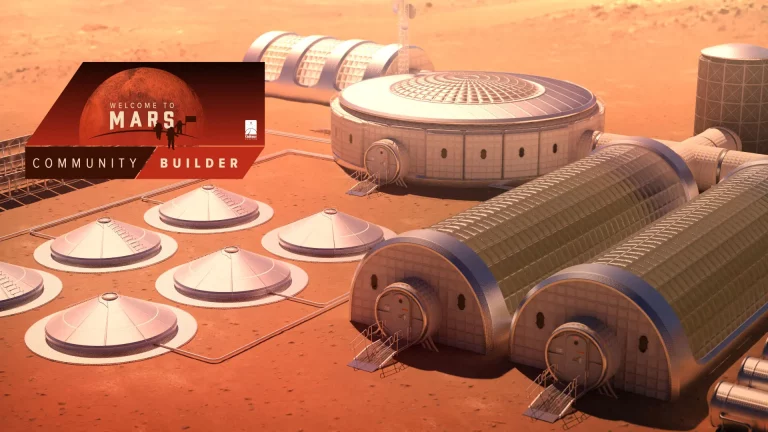
Many in your audience will be trying AR or VR for the first time, so the experience has to feel intuitive from the first second. Pixeldust designs for comfort and clarity, then builds the 3D content and real-time code in one team. Our work includes the Leidos VR experience, the Challenger Center’s Mars Community Builder AR and interactive installations in Monterrey’s public spaces.
We prototype quickly and test with real users, so your stakeholders can try the experience early and approve it with confidence. Problems with navigation, comfort or performance surface while they are still simple and inexpensive to fix, not after launch.
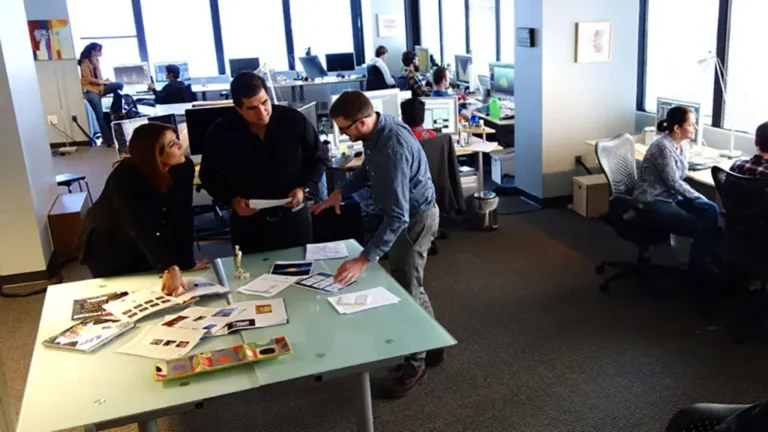
Content, development and on-site installation are handled by one accountable team, with studios in the United States, Spain and Mexico. After launch we support the experience with updates and maintenance, and the 3D assets can be reused in films, stills and future projects.
02 — Process
Our AR and VR development process
Every Pixeldust development project follows the same proven six-stage pipeline, refined over two decades of building interactive experiences for broadcast, healthcare, and corporate clients. You review and approve at every stage, so there are no surprises, no scope creep, and no missed deadlines.
Discovery
Purpose, audience and venue defined.
Experience goals
Audience & venue
AR vs. VR fit
Architecture & Planning
Platform and hardware blueprint approved.
Platform selection
Hardware specification
Content roadmap
Design & Prototyping
Interactions tested in early prototypes.
Storyboards & flows
Spatial UX design
Interactive prototypes
Development
3D assets and interactions built.
3D models & environments
Interaction programming
Sprint demos
Testing & QA
Comfortable, intuitive for every visitor.
Device & headset testing
Comfort & usability
Performance tuning
Launch & Support
Deployment, installation and content updates.
Store or WebXR release
On-site installation
Content updates
03 — Capabilities
What we create
Pixeldust creates AR and VR experiences that serve a clear purpose — whether that purpose is education, brand engagement, training, or entertainment. Our augmented reality work includes mobile AR apps that overlay digital content onto the real world through a smartphone or tablet, making museum exhibits, product demonstrations, and marketing campaigns interactive and memorable. We build marker-based and markerless AR experiences, location-triggered content, and AR-enhanced print materials that bring static pages to life.
Our virtual reality development includes fully immersive VR environments for headsets like Meta Quest, where users can explore, interact with objects, and engage with content in three dimensions. We create VR walkthroughs for architectural visualization, VR training simulations for healthcare and industrial applications, and VR storytelling experiences that place audiences inside the narrative.
We also develop mixed reality experiences that blend AR and VR elements, interactive installations for museums and visitor centers, and WebXR experiences that deliver immersive content through a standard web browser without requiring an app download. For clients who need a complete solution, we handle everything from concept development and content creation through hardware specification and on-site installation.
Every immersive experience we build is designed with the end user in mind — intuitive controls, comfortable viewing, and clear guidance so visitors of all ages and technical abilities can engage without hesitation.
Mobile AR apps
Digital content layered onto exhibits, products and campaigns through a phone or tablet.
AR-enhanced print & places
Marker-based, markerless and location-triggered AR that brings static pages to life.
Immersive VR environments
Headset worlds where users explore, handle objects and engage in three dimensions.
VR training & walkthroughs
Training simulations for healthcare and industry, plus architectural walkthroughs.
Mixed reality & WebXR
Blended AR and VR, and immersive content in a browser with no download.
Immersive installations
Museum and visitor-center experiences, from concept through hardware and on-site install.
Pixeldust has built immersive experiences for museums and science centers, including interactive installations for the Smithsonian that use AR and VR to bring scientific concepts to life. We work with zoos and aquariums — including the Singapore Zoo — that want to deepen visitor engagement with animal habitats and conservation stories, and with cultural institutions that use immersive technology to make history and art accessible in new ways.
We also serve healthcare organizations using VR for patient education and clinical training, corporate clients who need immersive product demonstrations or experiential marketing, educational institutions integrating AR and VR into curricula, and entertainment companies creating location-based attractions that draw crowds and generate revenue. Our cross-industry experience means we understand both the creative possibilities and the practical constraints of deploying immersive technology in the real world.
We bring particular depth to projects that require scientific accuracy — molecular visualizations, anatomical models, and natural history reconstructions where the content must be both visually stunning and factually precise.
Museums & science centers
AR and VR installations, including Smithsonian work, that bring scientific concepts to life.
Zoos & cultural institutions
Habitat, conservation, history and art stories made immersive, including work for Singapore Zoo.
Healthcare & education
VR for patient education and clinical training, and AR and VR integrated into curricula.
Brands & entertainment
Immersive product demos, experiential marketing and location-based attractions that draw crowds.
The Business Case for Immersive Experiences
Immersive experiences drive measurable business outcomes. In retail, AR product visualization reduces return rates and increases purchase confidence. In training, VR simulations improve knowledge retention by up to four times compared to traditional methods and reduce training time significantly. In museums and attractions, immersive installations increase dwell time, drive repeat visits, and generate the kind of social media sharing that no paid campaign can replicate.
The economic case is strengthened by the declining cost of hardware and the increasing accessibility of the technology. Mobile AR requires nothing more than a smartphone most visitors already carry. WebXR eliminates the app download barrier entirely. And as headset adoption grows, the audience for VR experiences expands from early adopters to mainstream users.
For organizations competing for attention — whether that attention comes from museum visitors, trade show attendees, potential customers, or employees in training — AR and VR offer a way to create experiences that are not just engaging but unforgettable. And unforgettable experiences are the ones that drive action.
The data supports the investment. Venues that add immersive experiences report higher visitor satisfaction, longer visits, increased gift shop revenue, and stronger word-of-mouth referrals. For corporate clients, immersive product demonstrations shorten sales cycles and increase close rates. The technology pays for itself when it is deployed with strategic intent.
Our Approach to Immersive Development
We start every AR and VR project with a clear understanding of who your audience is, where they will encounter the experience, and what you want them to take away from it. Immersive technology offers extraordinary possibilities, but the most effective experiences are the ones designed with restraint — using the technology to serve the story rather than showcasing the technology itself.
Our development process includes early prototyping and user testing so you can experience the concept in headset or on device before committing to full production. This iterative approach prevents the costly surprises that plague immersive projects built on assumptions about how users will behave in a virtual or augmented environment.
Build an experience people step into
Training, marketing or entertainment: tell us the goal and we’ll design an AR or VR experience around it.
Pixeldust is an Emmy Award-winning studio that has been creating interactive content for more than two decades. We were building immersive experiences before they had a marketing category, and our team brings a rare combination of creative storytelling, scientific accuracy, and technical engineering to every AR and VR project.
We understand that immersive technology is a means, not an end. The headset, the phone, or the installation is just the delivery mechanism. What matters is the experience itself — the story it tells, the emotion it creates, and the outcome it drives. We start with your objectives and your audience, and we select the technology that serves them best.
Our production quality sets us apart. Because we are an animation and visual effects studio at our core, every asset in your immersive experience — from 3D models to environments to animated sequences — is crafted to the highest visual standard. That quality is what makes the difference between an experience that feels like a tech demo and one that feels like a destination.
If you need an immersive experience that captivates audiences, communicates complex ideas, and delivers measurable results, Pixeldust is the partner to build it.
“I was blown away by the quality, speed, and professionalism. Pixeldust truly exceeded expectations on our animated project.”
Jenna R
Executive Producer
08 — FAQ
Frequently asked questions
Augmented reality overlays digital content onto the real world through a smartphone, tablet, or AR glasses. Virtual reality immerses the user in a fully digital environment through a headset. Both are powerful tools for engagement, and the right choice depends on your audience, venue, and objectives.
Most AR experiences work on standard smartphones and tablets that users already own. For installations and exhibits, we can also develop for dedicated AR glasses or projection-based systems depending on the venue requirements.
Timelines vary with complexity. A focused mobile AR experience might take 8–14 weeks, while a full VR environment with interactive elements could take 4–8 months. We provide a detailed timeline after the discovery and planning phase.
Yes. We build our experiences with content management in mind, so educational content, product information, or interactive elements can be updated without rebuilding the entire application.
We develop for iOS and Android mobile AR, Meta Quest and other VR headsets, WebXR for browser-based immersive experiences, and custom installation hardware for museums and attractions. We recommend the platform based on your audience and deployment context.