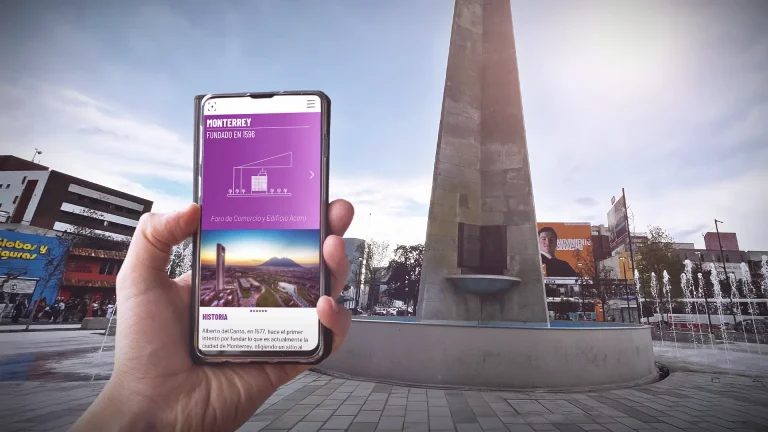
Work for Singapore Zoo and public spaces in Monterrey, Mexico.
01 — Why us
Destination Experiences Designed, Built and Supported by One Team
Great destination experiences do more than attract visitors. They inspire curiosity, create lasting memories, and give people a reason to return. Pixeldust transforms physical spaces into immersive environments through storytelling, interactive technology, multimedia, and experiential design. With studios in the United States, Spain, and Mexico, our work includes Singapore Zoo’s Reptopia and Monterrey’s Obelisk Park, Plaza Gastronómica, and Plaza Cultural Nuevo León.
Every successful experience begins with understanding the space, the audience, and how visitors interact with their surroundings. We combine creative vision, strategic planning, prototyping, and technology integration to deliver engaging attractions while minimizing costly revisions and keeping production on schedule.
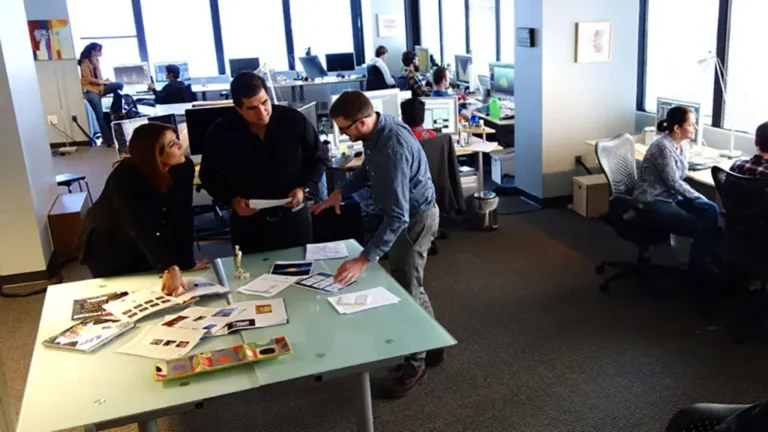
From concept and content creation to installation and ongoing support, Pixeldust brings every discipline together under one roof. Our integrated approach simplifies production, ensures creative consistency, and delivers reliable experiences that evolve with your audience.
Because extraordinary destinations aren’t just places people visit. They’re experiences people remember and return to.
02 — Process
Our location-based experience process
Every Pixeldust development project follows the same proven six-stage pipeline, refined over two decades of building interactive experiences for broadcast, healthcare, and corporate clients. You review and approve at every stage, so there are no surprises, no scope creep, and no missed deadlines.
Discovery
Venue, visitors and story defined.
Site & visitor flow
Content goals
Accessibility needs
Architecture & Planning
Hardware and systems blueprint approved.
Hardware specification
Power & connectivity
Enclosure design
Design & Prototyping
Interactions tested before fabrication.
Interaction design
Visual & motion design
Working prototypes
Development & Fabrication
Software, content and hardware built.
Interactive software
Content management system
Multilingual content
Installation & Testing
Tested on site for daily traffic.
On-site installation
Durability testing
Auto-restart checks
Launch & Support
Staff trained, exhibits kept running.
Staff training
Content updates
Maintenance agreements
03 — Capabilities
What we create
Pixeldust creates location-based interactive experiences that turn physical spaces into destinations people remember and recommend. We design and build touchscreen interactives and kiosk installations that invite visitors to explore content at their own pace — zooming into datasets, navigating timelines, manipulating 3D models, and discovering stories through hands-on interaction.
Our location-based services include immersive projection environments that surround visitors with visual content, interactive walls and floors that respond to movement and touch, augmented reality overlays that add digital layers to physical exhibits, and multi-user experiences that encourage group interaction and social engagement. We also build the content management systems that let your team update exhibit content without calling a developer.
For larger venues, we develop wayfinding and visitor guidance systems, interactive exhibit companions that extend the visit through personal devices, and data-driven installations that draw on live feeds — weather, social media, scientific instruments — to create experiences that are different every time a visitor returns.
We also handle the practical side of location-based deployment: hardware specification, custom enclosure design, power and connectivity requirements, accessibility compliance, and multilingual content support. Our installations are designed to look beautiful and operate reliably in high-traffic public environments for years.
Touchscreens & kiosks
Explore datasets, timelines and 3D models at each visitor's own pace.
Projection environments
Immersive spaces that surround visitors with visual content.
Interactive walls & floors
Surfaces that respond to movement and touch, built for group play.
AR exhibit layers
Digital layers on physical exhibits, plus companions on visitors' own devices.
Live-data installations
Weather, social and scientific feeds that make every return visit different.
Hardware & content systems
Enclosures, power, connectivity and a CMS your team updates without developers.
Pixeldust has built location-based experiences for museums and science centers, including interactive installations for the Smithsonian that serve millions of visitors annually. We have created experiences for zoos and aquariums — including the Singapore Zoo — that use interactive technology to deepen visitor engagement with wildlife and conservation. We work with visitor centers and heritage sites that need to bring history and culture to life for diverse audiences.
We also serve corporate clients building brand experience centers and product showrooms, healthcare organizations creating patient and public education spaces, theme park and attraction operators looking for cutting-edge interactive content, and educational institutions developing hands-on learning environments. Our experience across these venue types means we understand the unique challenges of each — from high-traffic durability requirements to accessibility standards to multilingual content needs.
We bring particular expertise to projects that involve complex scientific or educational content, where the interactive experience must be both visually compelling and factually accurate. Our two decades of work with institutions like the Smithsonian and NIH have given us deep fluency in translating expert knowledge into engaging public-facing experiences.
Museums & science centers
Smithsonian installations and exhibits that turn complex science into hands-on discovery for millions.
Zoos & heritage sites
Wildlife, conservation, history and culture brought to life, including work for Singapore Zoo.
Brand centers & attractions
Experience centers, product showrooms and theme park content that draw crowds and repeat visits.
Healthcare & education
Patient and public education spaces, and hands-on learning environments for institutions.
The Business Case for Location-Based Interactives
Location-based experiences drive measurable business outcomes for venues and organizations. Interactive exhibits increase visitor dwell time, which correlates directly with satisfaction scores, gift shop spending, and the likelihood of recommending the venue to others. Immersive installations generate social media content organically — visitors photograph and share their experiences, providing marketing reach that no paid campaign can match in authenticity.
For museums and cultural institutions, interactive experiences attract new audiences — particularly younger visitors and families — who might not engage with traditional static exhibits. For corporate showrooms and brand experience centers, immersive installations communicate product value and brand story in ways that brochures and presentations cannot. For zoos and aquariums, interactive content deepens the connection between visitors and conservation missions.
The return on investment extends beyond a single installation. Well-designed interactives can be refreshed with new content, expanded with additional modules, and repurposed for traveling exhibitions — maximizing the value of the initial technology investment over years of operation.
There is also a competitive dimension. Venues that invest in interactive experiences differentiate themselves in an increasingly crowded market. When visitors have a choice between a traditional exhibit and an immersive, interactive one, they choose the experience. And they tell their friends about it, generating the organic word-of-mouth that drives sustained attendance growth. In a market growing at nearly 20% annually, the organizations that invest now are positioning themselves to capture the largest share of a rapidly expanding audience.
Our Approach to Location-Based Design
We design for the real world, not the demo room. Every location-based experience we build is engineered for the specific conditions of your venue — lighting, foot traffic, noise levels, visitor demographics, and operational constraints. We consider how visitors will discover the installation, how they will approach it, how long they will engage, and how the experience fits into the larger visitor journey.
Our installations are designed for durability and low maintenance. We select commercial-grade hardware rated for continuous operation, build software with automatic recovery from crashes and power interruptions, and design physical enclosures that withstand years of public use. We understand that an installation that is down is worse than no installation at all, and we engineer accordingly. Our goal is to deliver an experience your team can rely on every day your venue is open, for years after installation.
Create a place people talk about
Tell us about the venue and its visitors. We’ll design interactive media that turns a space into a destination.
Pixeldust is an Emmy Award-winning studio with more than two decades of experience creating interactive content for the world’s most prestigious cultural and scientific institutions. We have built installations that operate reliably on museum floors serving thousands of visitors a day, and we understand the practical realities of location-based deployment — durability, maintenance, accessibility, and content lifecycle management.
We are not just a technology vendor. We are storytellers, designers, and animators who build experiences that move people. Our team combines the visual quality of a professional animation studio with the interactive expertise of a development studio and the institutional knowledge of a museum exhibit firm. That combination is what makes a Pixeldust installation look extraordinary and work flawlessly.
Our approach is collaborative and transparent. We work alongside your exhibit designers, curators, and operations teams to ensure every installation integrates seamlessly with your venue’s visitor flow, brand standards, and operational requirements. You are involved at every stage, from concept through installation and training.
If you need a location-based experience that draws visitors, deepens engagement, and becomes the highlight of your venue, Pixeldust is the team to build it.
“I have worked with Pixeldust for several years on molecular and medical animations. They have a very good visual feel for complex scientific content.”
M. Nesvade
Line Producer
08 — FAQ
Frequently asked questions
Location-based experiences are designed for any physical space where you want to engage visitors — museums, science centers, zoos, aquariums, visitor centers, corporate showrooms, brand experience centers, theme parks, and educational institutions.
We design and build for high-traffic public environments. Our installations use commercial-grade hardware, ruggedized enclosures, and software that restarts automatically after power interruptions. We design for years of reliable daily operation.
Yes. We build content management systems that let your team update text, images, data, and interactive elements without developer involvement. This keeps exhibits current and extends the life of the installation.
Timelines depend on scope and complexity. A single touchscreen interactive might take 8–12 weeks, while a multi-station immersive environment could take 6–12 months. We provide a detailed timeline after the discovery and planning phase.
Yes. We manage hardware specification, installation coordination, on-site setup, testing, and staff training. We also offer ongoing maintenance and support agreements to ensure your installation performs reliably over its full lifespan.