
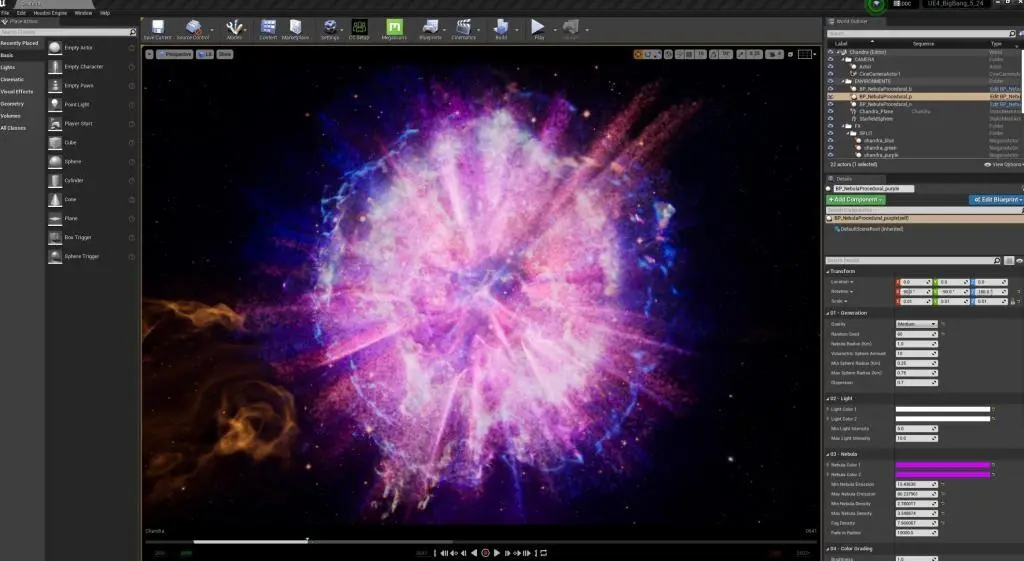
The line between gaming and professional animation has blurred dramatically. In 2026, real-time game engines like Unreal Engine 5.5 and Unity 6 are standard tools in animation studios worldwide, used to produce everything from television series and feature films to corporate presentations and architectural visualizations. These engines render cinematic-quality visuals in real time, eliminating the hours-long render times that traditional animation pipelines required. For studios like Pixeldust, game engine technology means faster iteration, more creative freedom, and the ability to deliver higher-quality animation at a pace that keeps up with modern production demands.
Real-Time Rendering Changes Everything
Traditional animation rendering could take hours per frame — a single minute of high-quality 3D animation might require days of render farm time. Real-time engines flip this equation entirely. Directors can make creative decisions on the fly, seeing final-quality results instantly. Camera angles, lighting, and even character performances can be adjusted in real time during a review session with the client in the room. This iterative workflow produces better creative outcomes because decisions are made visually rather than speculatively, and it compresses production timelines from months to weeks for many project types.

A rendered frame from the short film “The Little Chef Saves the World,” Produced by Pixeldust.
Motion Capture and Virtual Characters
Game engines excel at integrating motion capture data, making performance-driven animation more accessible than ever. Modern markerless motion capture systems — powered by AI and multiple camera arrays — can capture an actor’s performance and apply it to a digital character in real time. This technology, once exclusive to blockbuster film productions, is now within reach of corporate and educational content creators. Combined with real-time facial capture and AI-driven lip sync, game engines enable the creation of expressive virtual characters and digital humans for training simulations, brand ambassadors, and interactive experiences.
The most innovative studios in 2026 do not choose between traditional and game engine pipelines — they combine them. Complex particle effects might still benefit from offline rendering, while character animation and environment work move to real-time engines. This hybrid approach lets studios match the right tool to each task, optimizing both quality and efficiency. At Pixeldust, we leverage game engine technology alongside our traditional animation expertise to deliver the best possible results for each project, whether it is a real-time interactive experience or a polished broadcast-quality animation.

A rendered frame from Kodak’s Prinergy branding animation Produced by Pixeldust.
The Future Is Hybrid
Bottom line
In conclusion, the use of gaming software in animation production has revolutionized the industry, enabling artists to produce high-quality animations faster and more efficiently. Most importantly, it enables faster turn-around times and prompt implementation of revisions. Pixeldust Studios has successfully adapted to this new pipeline, allowing them to take an animation from concept to completion faster than ever before while retaining the highest quality of animation. The studio’s use of gaming software has opened up new possibilities and opportunities, and it continues to be at the forefront of innovation in the animation industry.
2023 3D Animation Reel | Pixeldust Studios