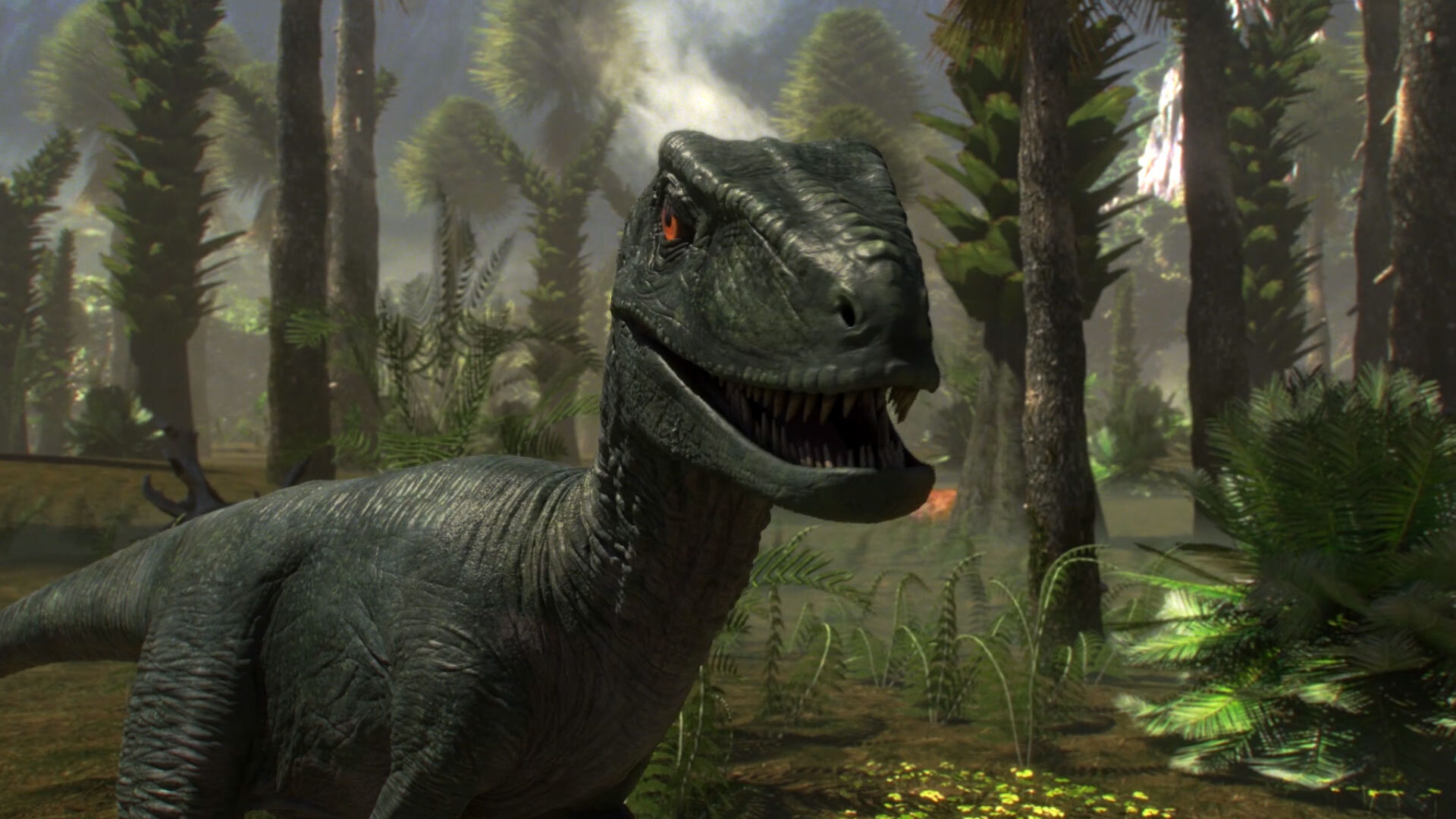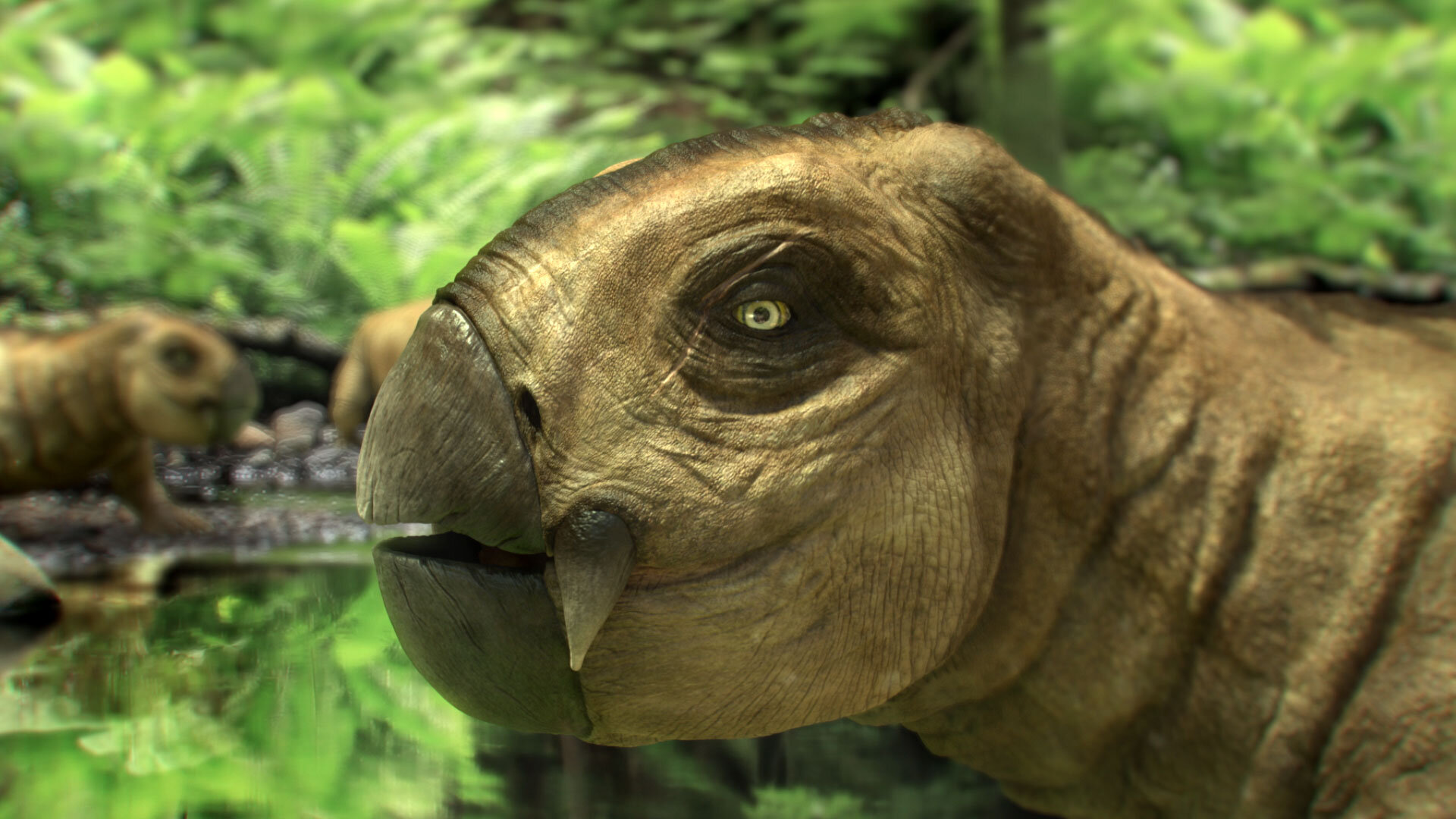
Most prehistoric documentaries open with dinosaurs. Ancient Earth opens long before them, in the Permian, when saber-toothed predators like the gorgonopsids and strange, armored plant-eaters ruled a world that had never seen a dinosaur.
Starting that much earlier gave audiences creatures they had rarely met on screen, and it is a big part of why Ancient Earth became one of the most compelling and popular series Pixeldust has produced.


Pixeldust digitally sculpted and textured every prehistoric creature from ratified scientific references. Drawing on more than a decade of dinosaur work, the team improved on past creature builds and pushed the photoreal detail further, using ZBrush and MARI for close-up detail on the models and Maya to rig each creature with intuitive control over every motion.


Each creature had to belong to its era, so Pixeldust gathered reference imagery and illustrations from approved scientific sources. World-building systems in Maya populated vast landscapes, Quixel assets added realistic vegetation and ground, and particle systems filled the ocean floor with thousands of corals and algae.
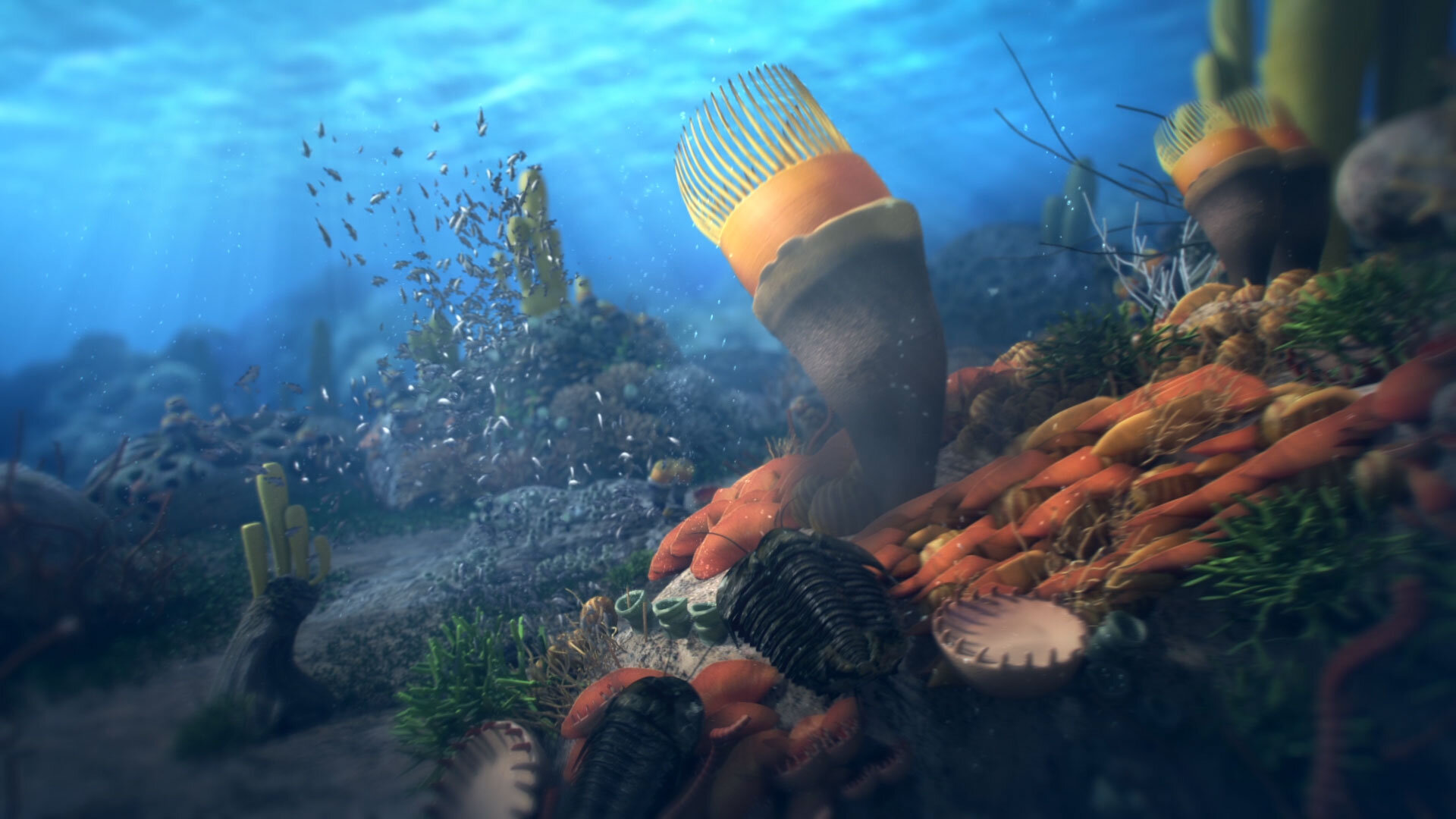

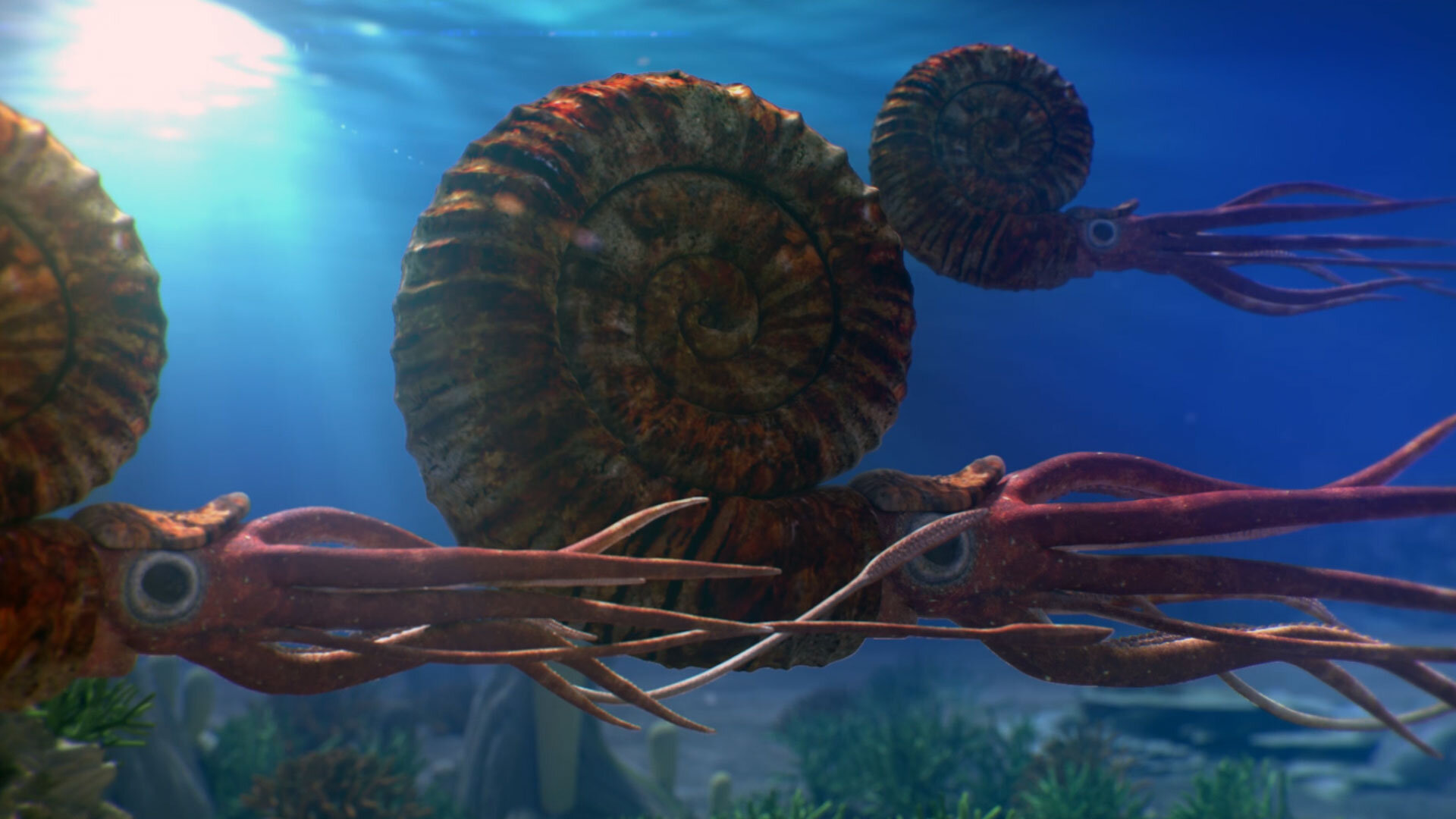
The series moves through the great periods of prehistoric life, from the oceans and predators of the Permian through the Triassic and Jurassic to the Cretaceous, when mosasaurs hunted the seas. Each era has its own creatures, landscapes and light, so viewers always know when they are.

To tell the story of Earth’s mass extinctions, the team added fiery asteroids, giant tsunamis, volcanic explosions and raining meteorites, each built to look completely photoreal.
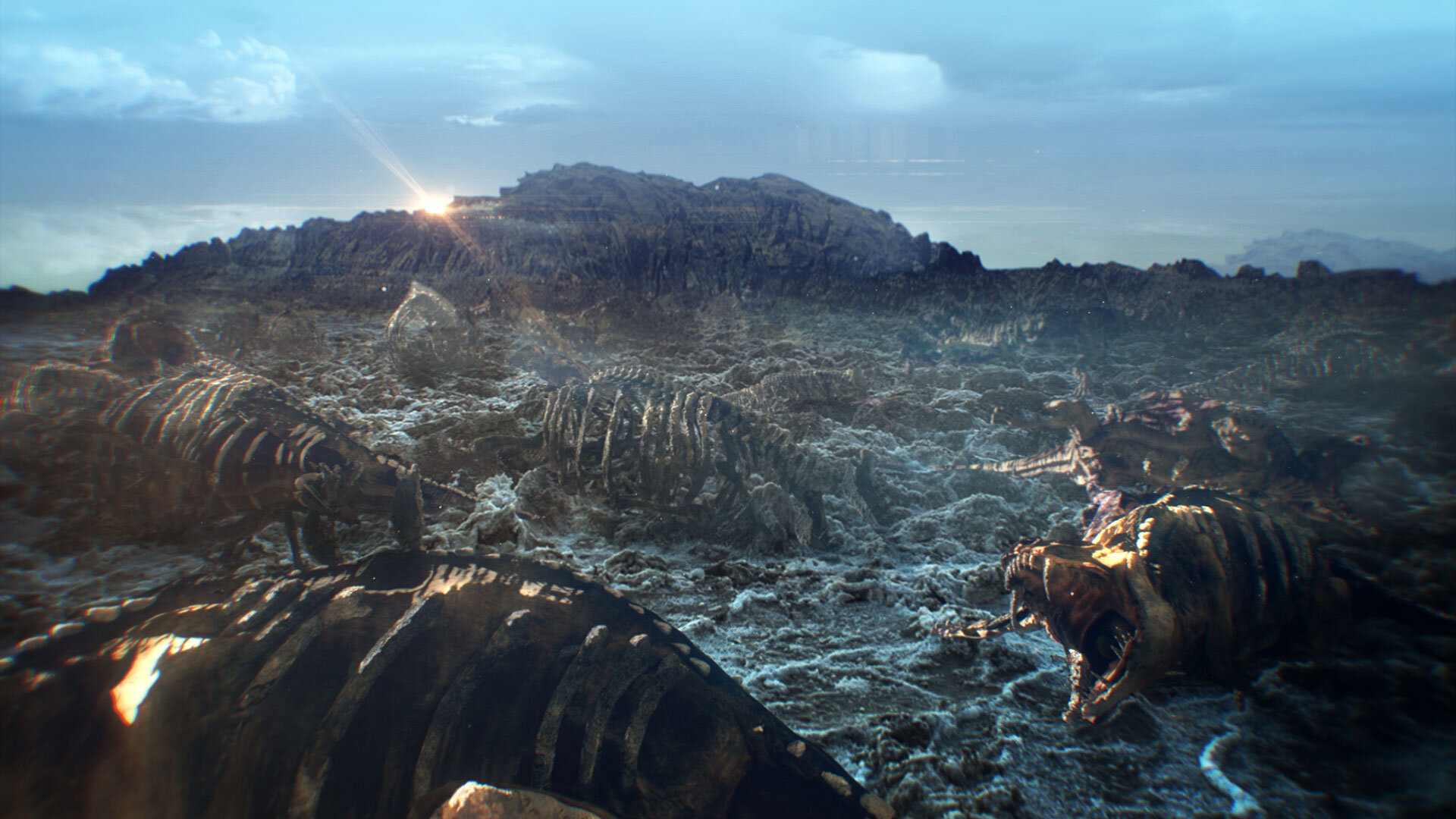

Rendering in Arnold for Maya on a robust render farm let the team turn around complex shots quickly. Arnold’s shading and subsurface scattering, combined with detailed 3D compositing in Nuke, help the creatures blend seamlessly into nature.
Dynamic camera moves put the viewer in the middle of a chase and send them scurrying from giant explosions, while matte paintings extend every scene to the horizon.