Breakout Force is a fast-paced runner with a twist. The objective is to run over all the blue squares, which turn red behind you and keep you from backtracking. Choose from a variety of creatures, each with its own gambit, from speed dashing to barrel rolling, and the game puts your tactical and twitch-reflex skills to the test.
It was designed from the ground up to bring a tactile, arcade-like experience to mobile, with swipe gesture input and a synchronized bullet-time system. Speedrun your way to the finish line or maximize your chain bonus: there are multitudes of playstyles to keep players coming back for more.
When multiple tiles are swiped in succession, time slows down and Blockchain mode is activated. The more tiles added to the chain, the higher the bonus gets. When the player stops touching the screen, the game exits Blockchain mode and our hero cycles through the path the player created. Sparkle trails, rising multipliers and a block-letter SMASH make every chain feel like a win.
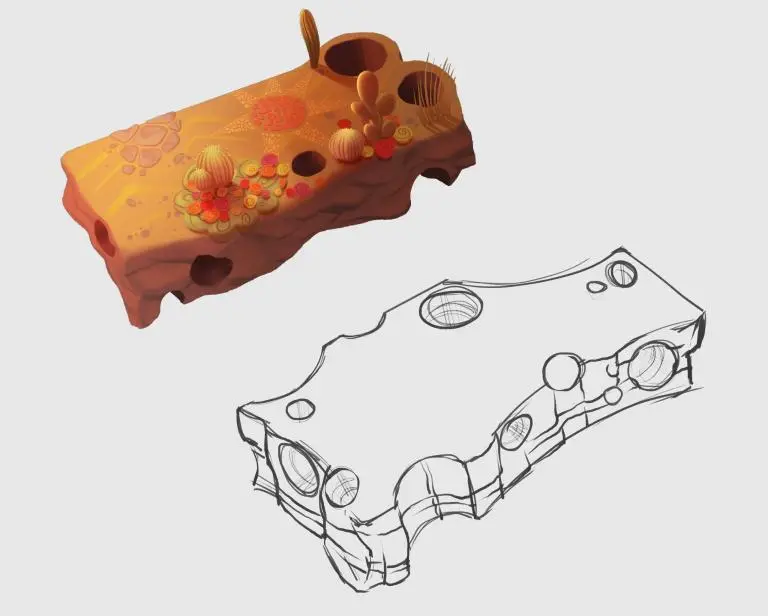
Our hero awakens to a lush world of rock platforms and vegetation. The player takes control from a top-down perspective via touch controls.
Pixeldust designed it as a stylized fantasy world of floating islands, mossy rock and glowing crystals, bathed in a twilight palette of violet and pink. The glowing blue and red tiles pop against the scenery, so players read the board at a glance, even at full speed.
We encounter a cluster of blue tiles that illuminate red when touched. When all the tiles are activated, the group shatters in succession.
When all remaining tiles are flipped, the game resolves on a scoreboard, where the player is evaluated and ranked on max chains, grace and overall efficiency.
If a red square is touched, we start from the last checkpoint, and bonus points are taken as a penalty.
As the game progresses, we encounter higher forms of clusters. Some focus primarily on reaction speed, while others lean heavier on tactical planning. Short in-game lessons introduce each mechanic right when it’s needed, and a clean HUD tracks the blue squares left, the clock and the score without getting in the way.
Our hero has a secret trick up its sleeve. When a double-tap is performed, we can dash through space from platform to platform.
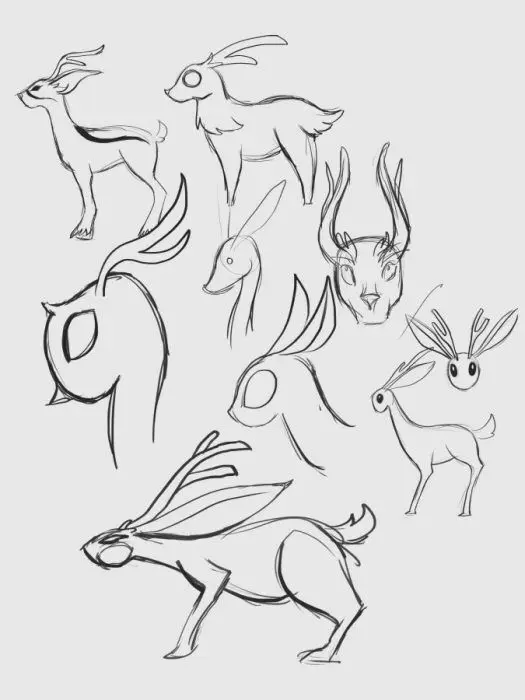
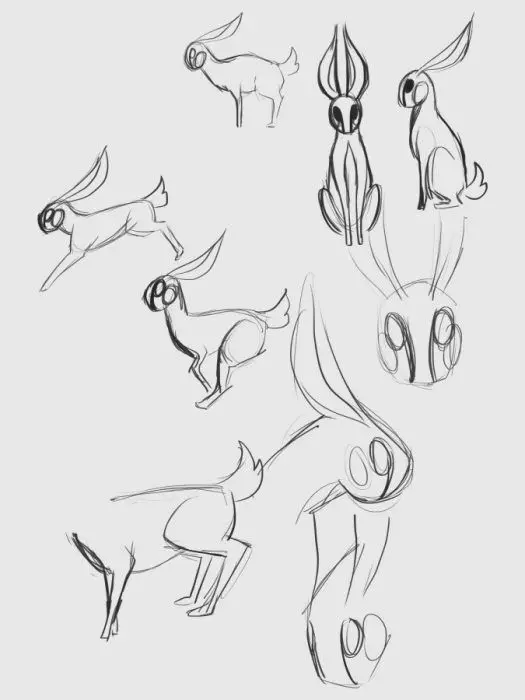
Every creature started on paper. The cast was explored in pencil, from antlered deer and long-eared hares to a horned spirit, then developed in painted color studies before each character was built in 3D.
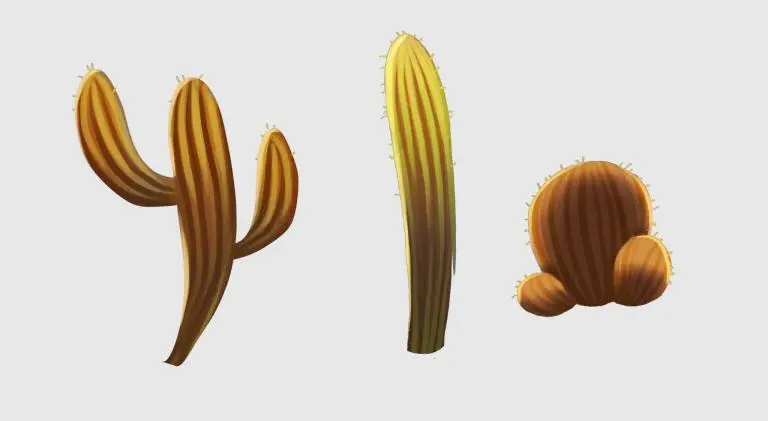
The world got the same treatment. Rock platforms, desert cacti and other props were painted as concept art first, then modeled and placed around the tile paths in the game.