
For this WebMD explainer on mantle cell lymphoma, its symptoms and its treatments, Pixeldust set out to make medicine feel bright and approachable. Clean light, cool tones and soft colors turn the inside of the body into a place viewers are comfortable exploring, while the 3D animation stays scientifically accurate, concise and precise.
To meet a quick turnaround, Pixeldust developed a unique real-time 3D animation pipeline. Every shot was made from start to finish in Unreal Engine, including shading, lighting and compositing, which removed the traditional render farm and its long waits for rendered frames entirely. The result is a fresh look that is easy to understand and fascinating to watch, rendered in 4K with a high degree of photoreal complexity in record time.
Light pinks and purples stand in solidarity with patients and represent the healthy parts of the body. Darker tones mark the affected areas and the malignant cells, so viewers can read the story at a glance.
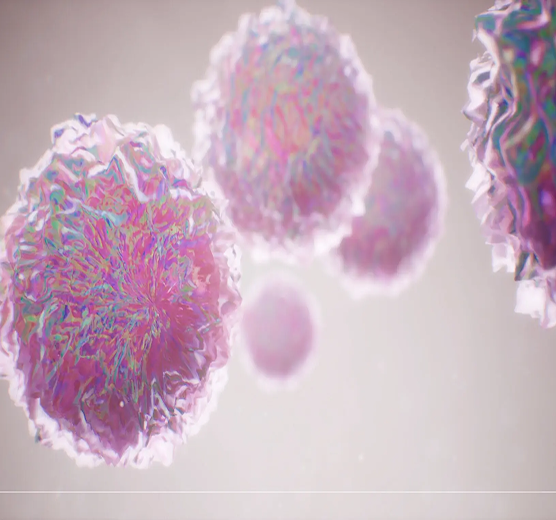
Because the real-time pipeline let animators work in several styles while staying photoreal, Pixeldust experimented with shading styles and camera angles at both the human and the microscopic level, building distinctive shots that keep the action engaging from start to finish.