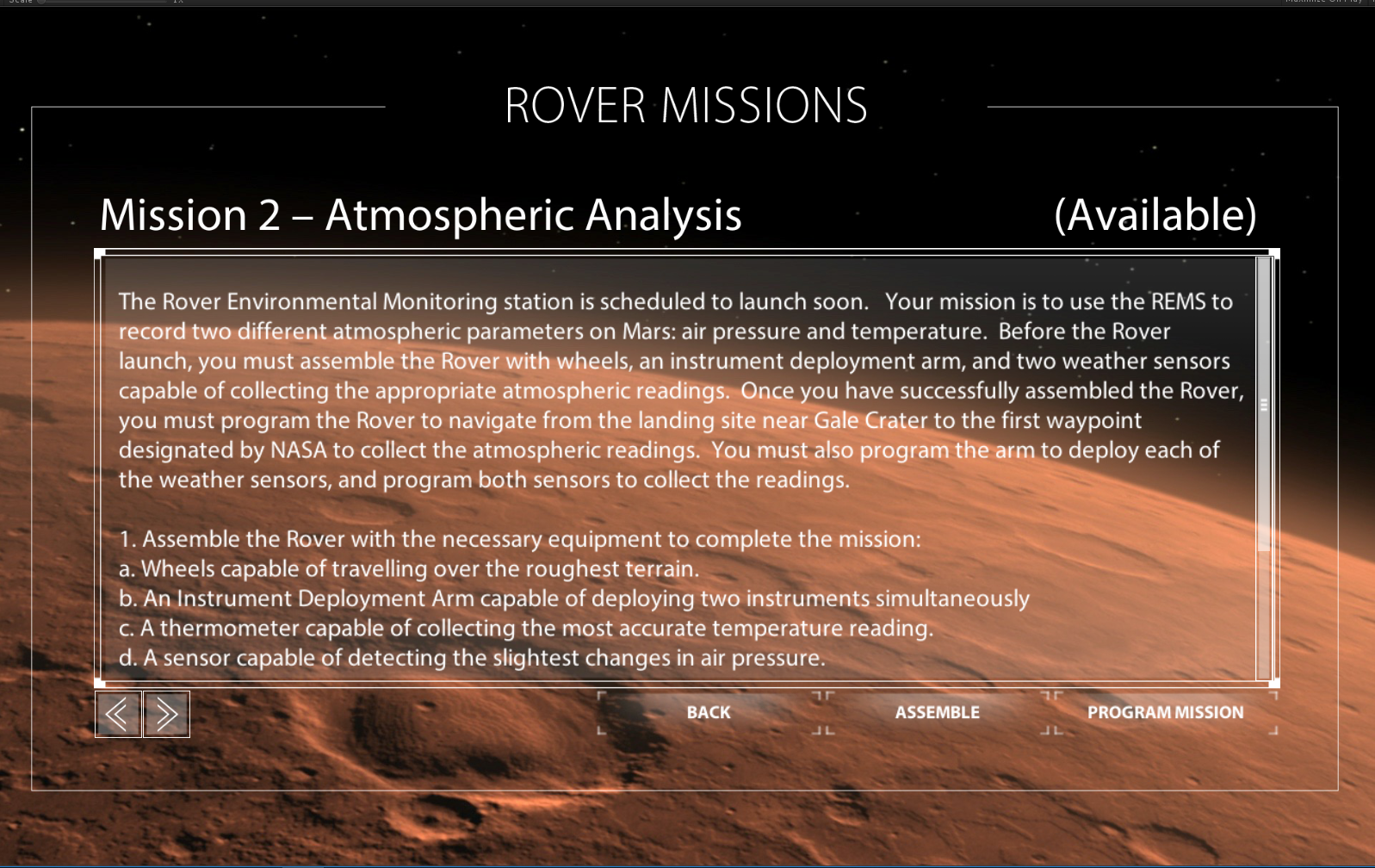
Every simulation starts with a mission briefing, laid out as a set of instructions and rover requirements. The game UI lets the player choose a Moon- or Mars-themed mission, each asking for different data: atmospheric readings, soil samples or photographs.
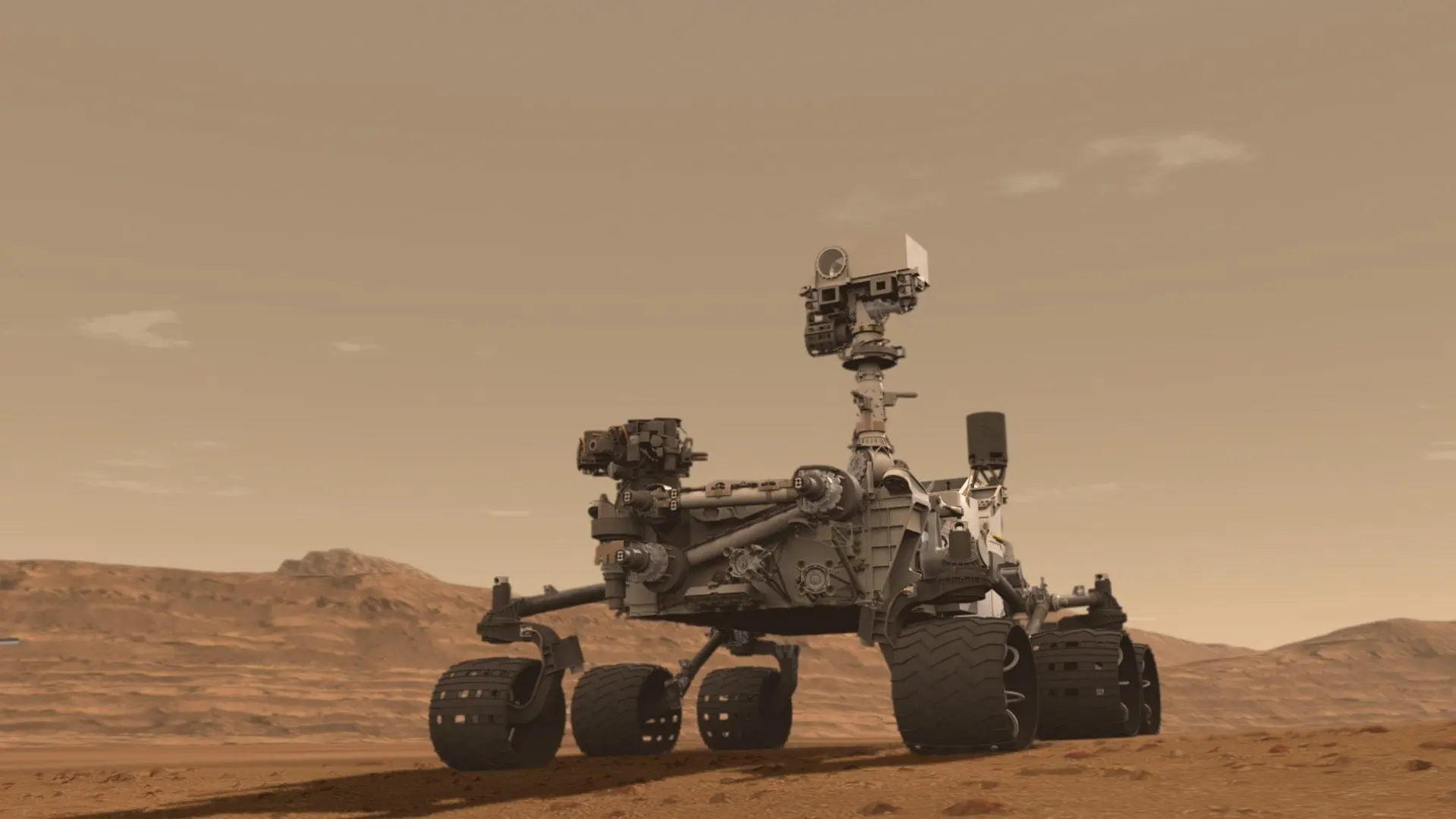
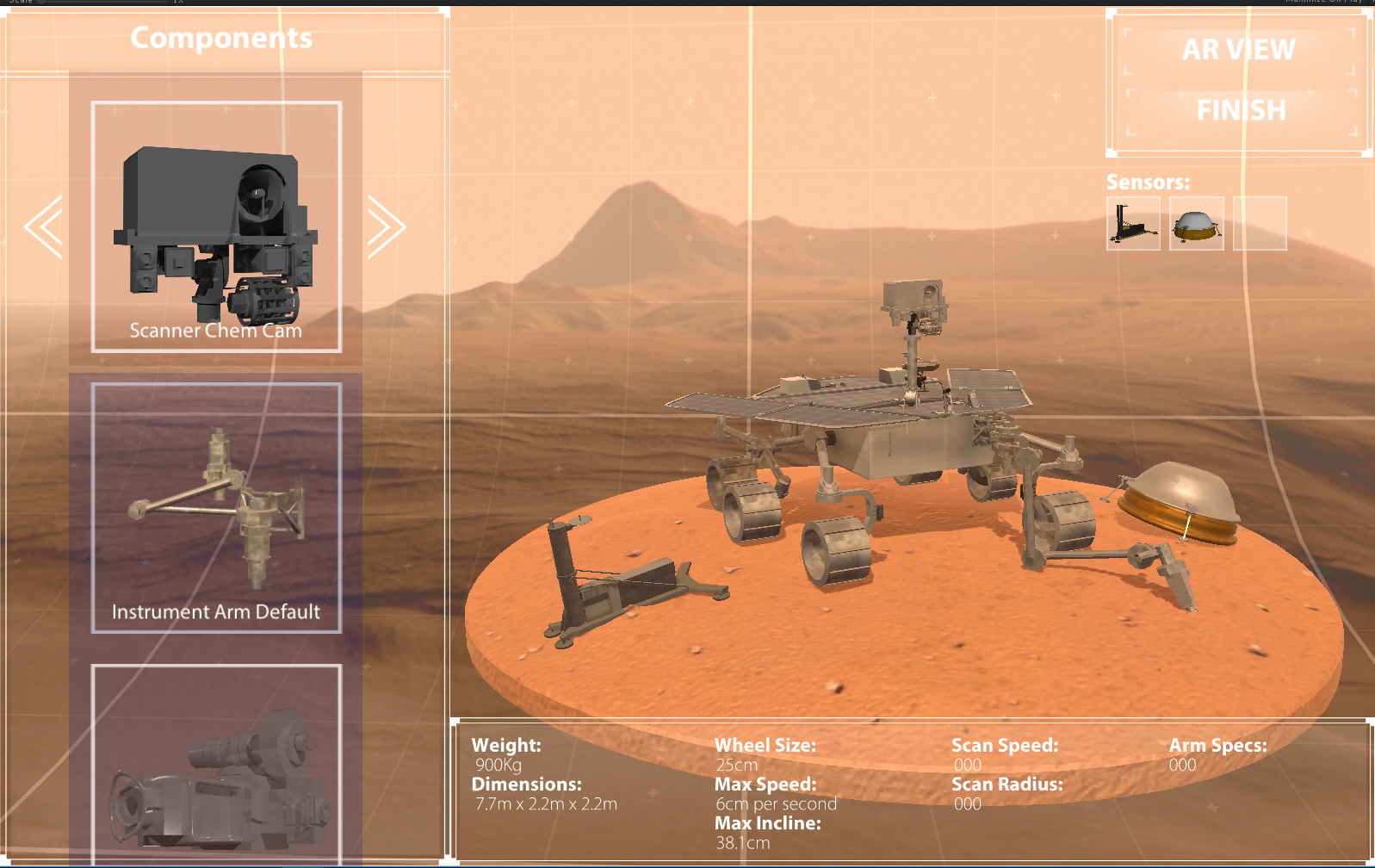
Players assemble the rover from scratch with every component the mission requires: body type, wheels, scanners, power supply, drills and an array of tools and sensors. Choosing the wrong part means the mission can’t succeed.

Once the rover is customized, the mission begins with a top-down view of the Martian terrain and a programmable drop-code terminal. Players plan and stack commands to complete the mission as efficiently as possible, a hands-on introduction to coding logic.
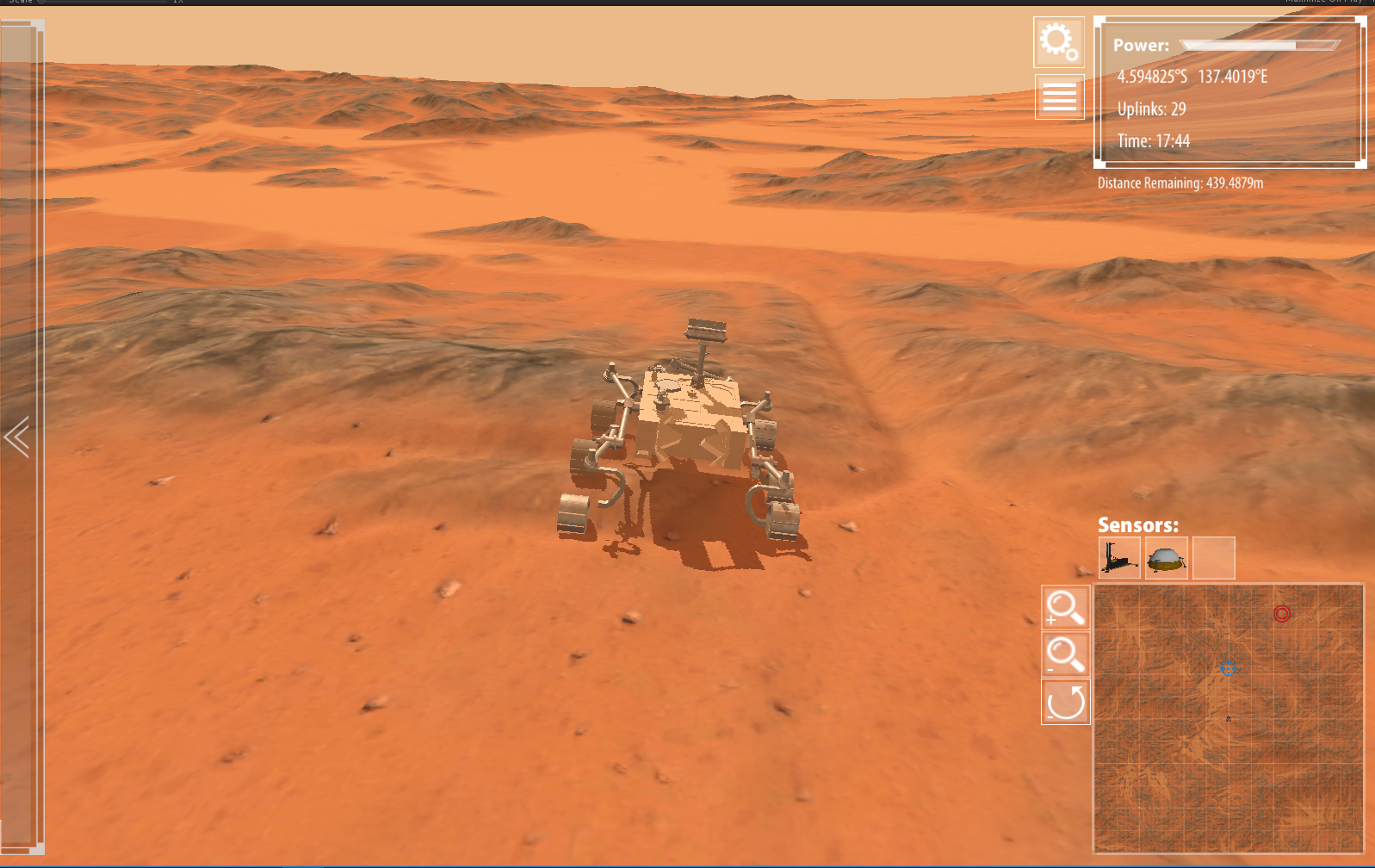
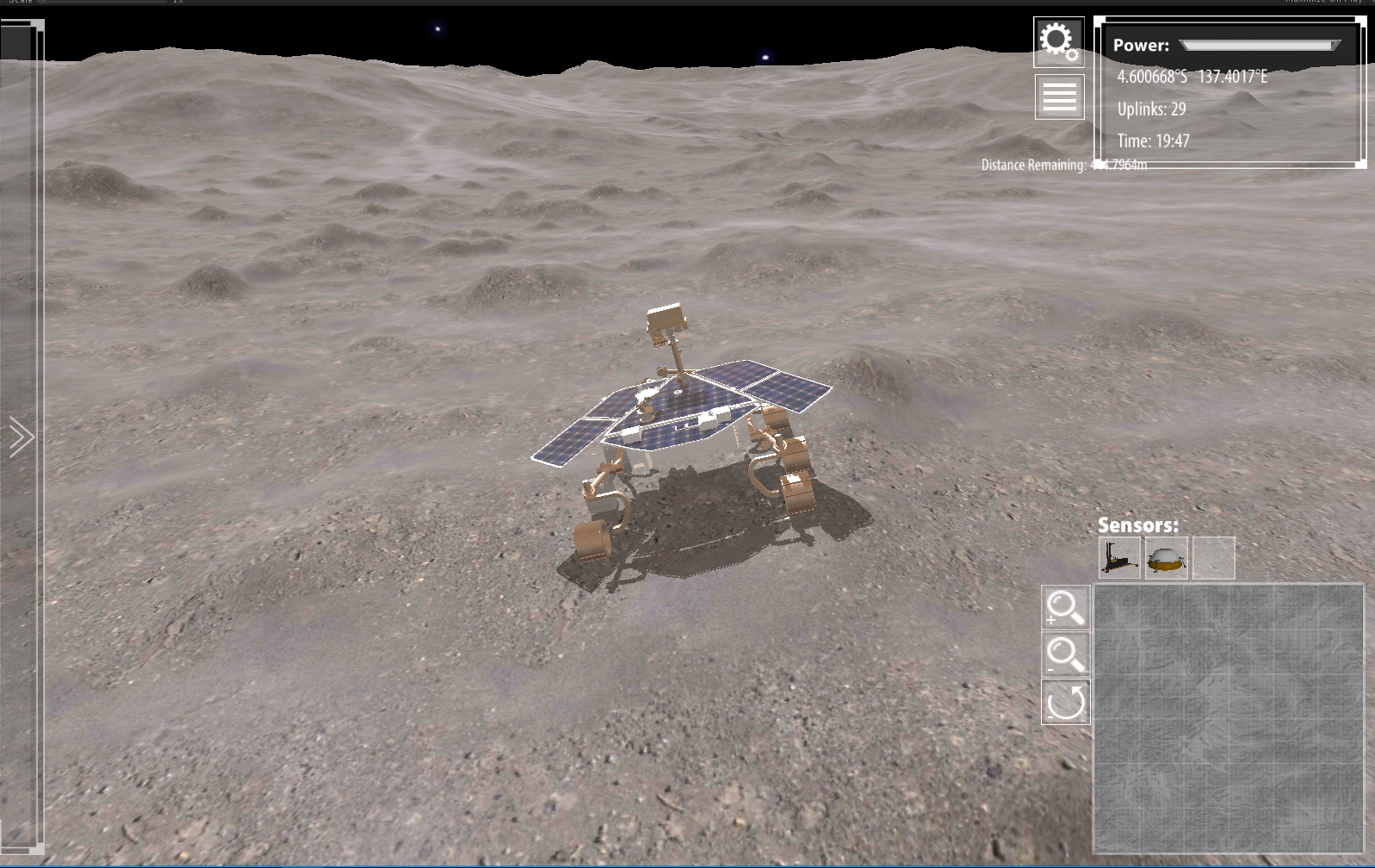
When the commands run, the rover traverses the landscape and sets off on its journey, turning, climbing and navigating exactly as it was programmed.

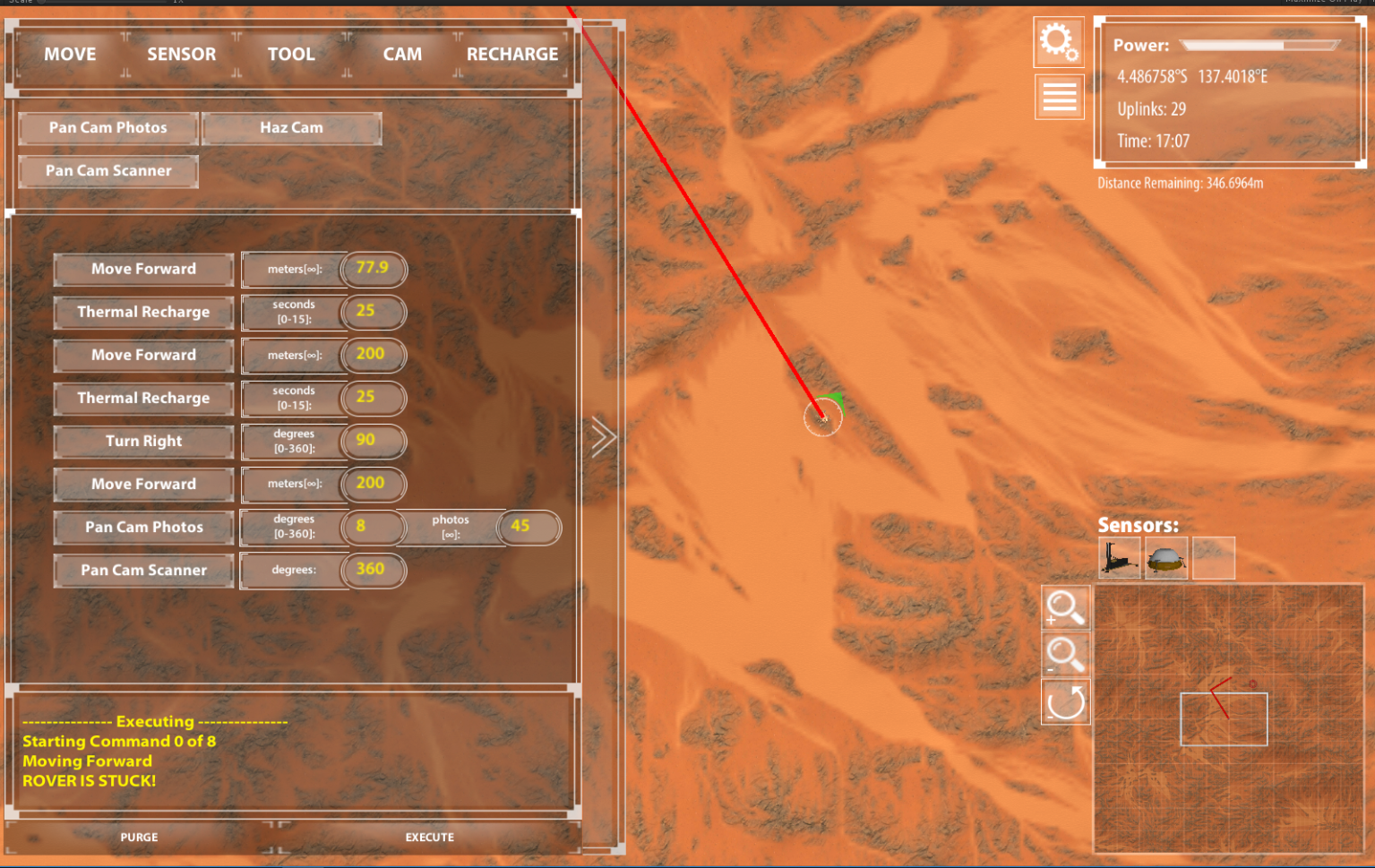
The Mars terrain can be rough, and even the slightest miscalculation can thwart a mission. Power and maintenance are crucial too: players have to plan their route around recharging, just as real mission teams do.
Along the way, players learn about different equipment, tools and deployments and how they are used on real missions, from drilling soil samples to scanning the surface. Their discoveries help unlock the secrets of our closest astronomical neighbors and pave the way for further exploration.