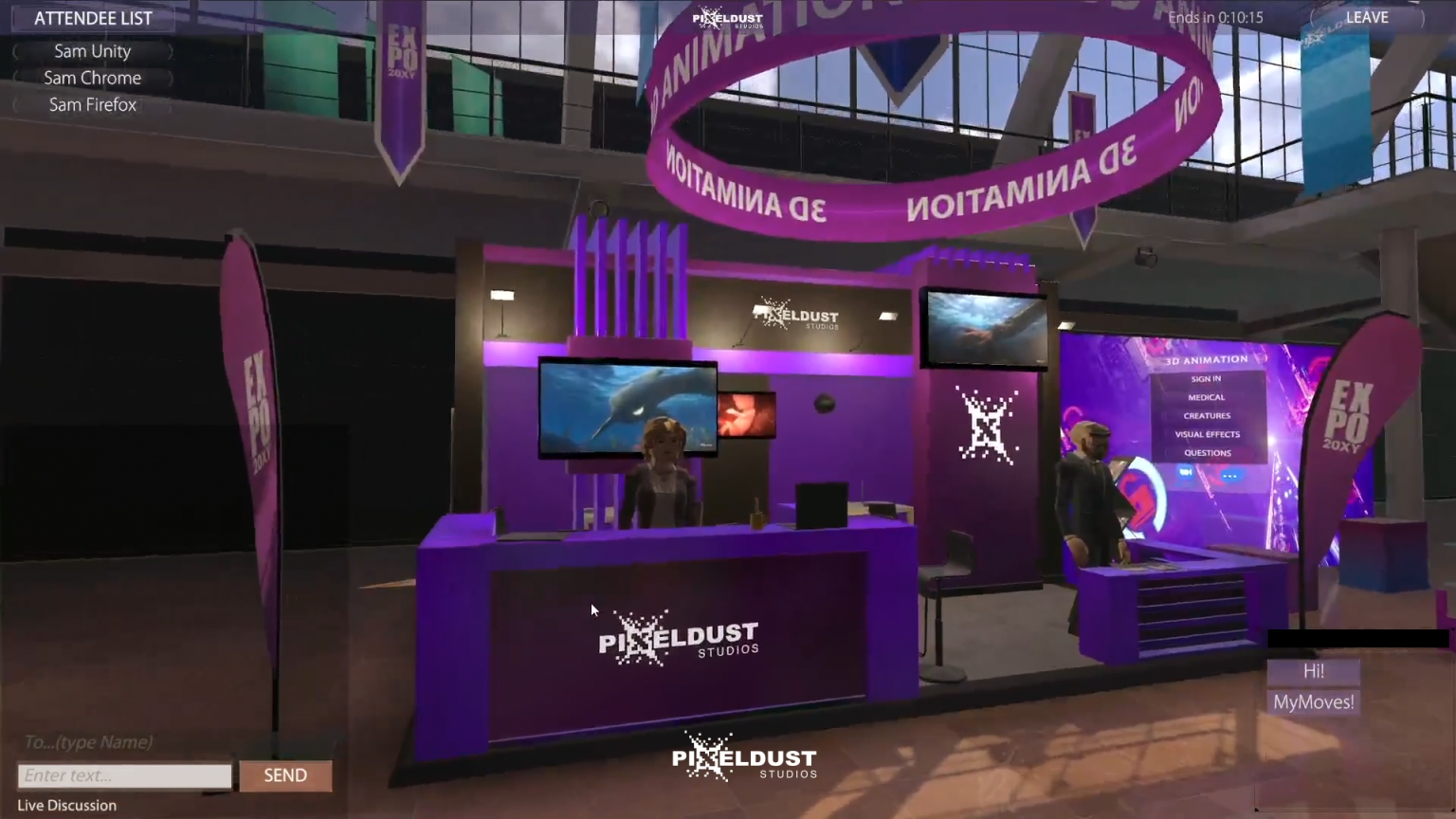
The hall is laid out like a real show floor. Attendees walk up to each booth and play its videos, flip through its images and pick up its information, the way they would at an in-person event.


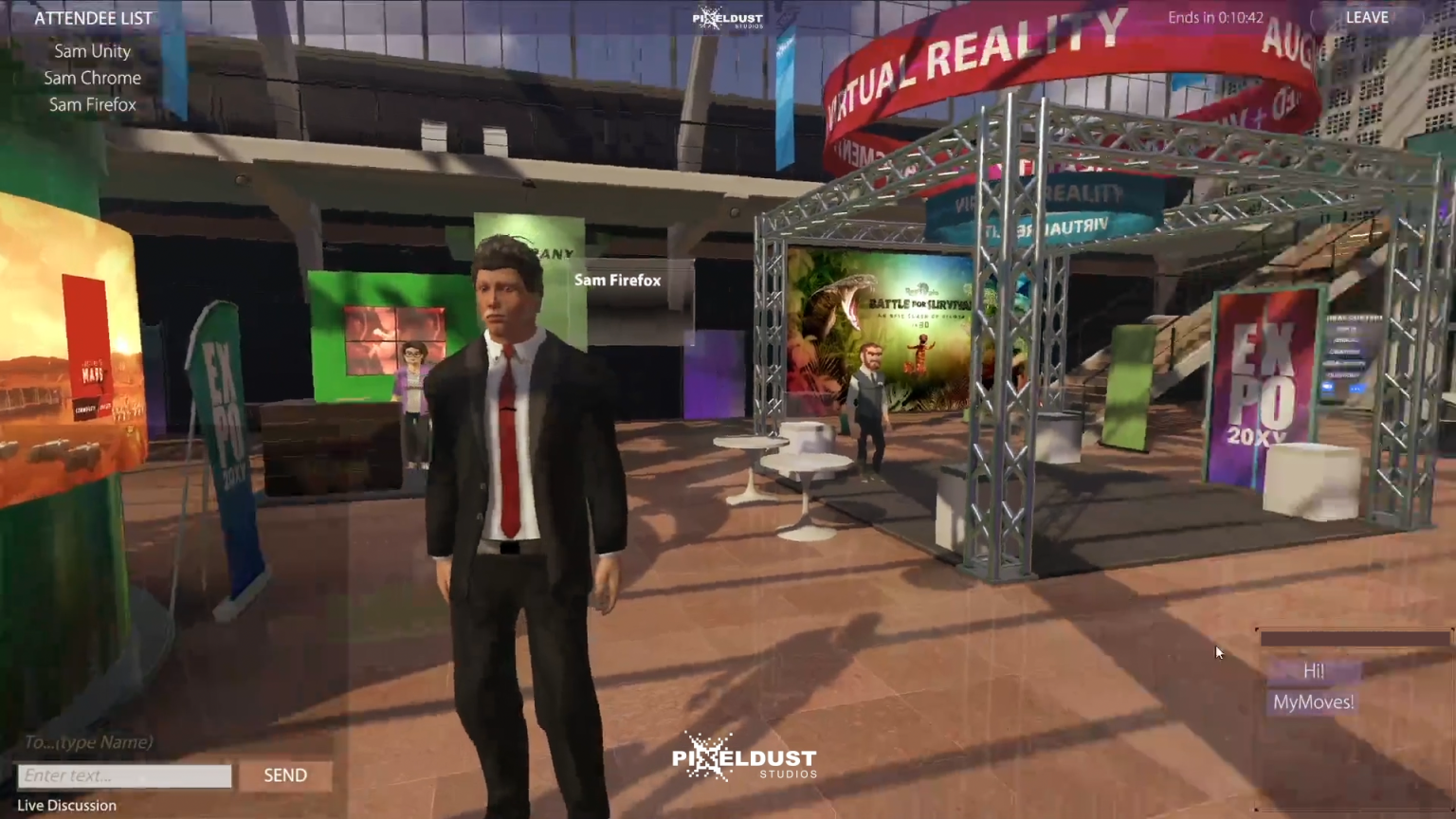
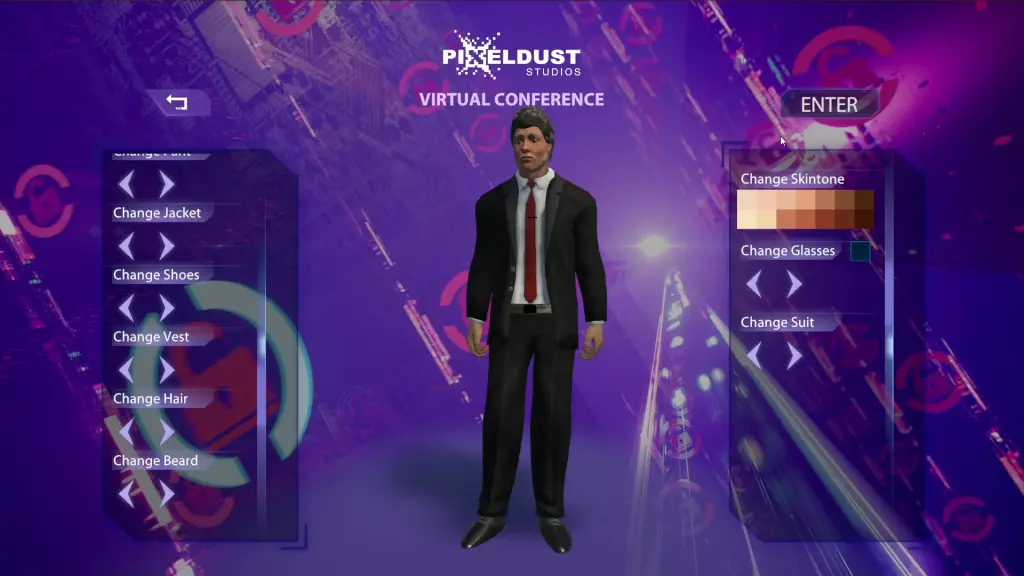
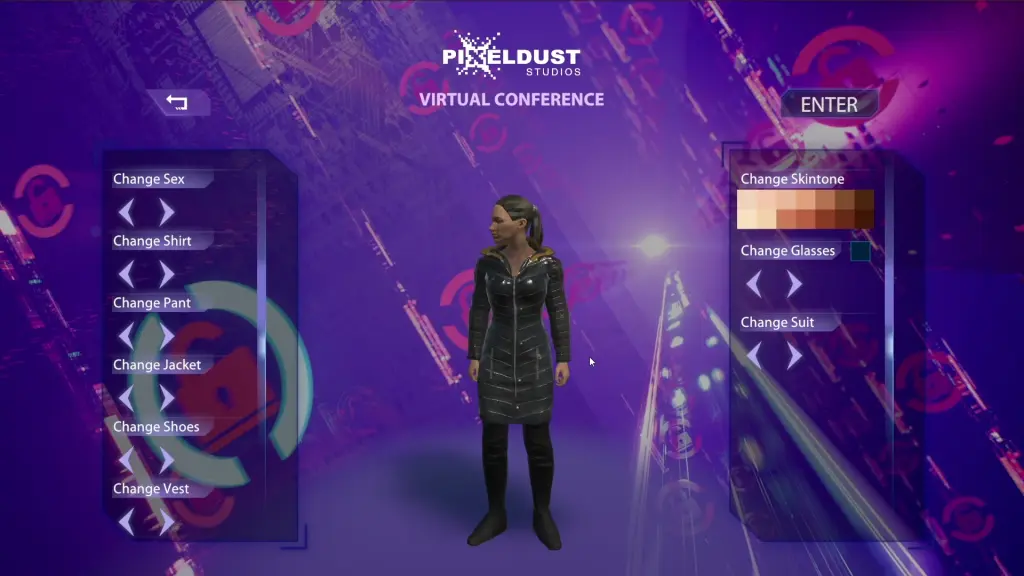
Every visitor builds their own avatar, choosing clothing, accessories, gender and race, so the crowd looks like the people in it. Attendees see each other move through the space, exchange information and start a text or voice chat just as they would in a multiplayer game.
When a conversation needs more time, they can launch a Zoom or Google Meet call from inside the experience, then step back onto the show floor when it ends.
The experience is built in Unity and published to WebGL, so it opens in Chrome, Firefox, Edge and Safari on Windows and Mac with nothing to install. Unity’s Universal Render Pipeline keeps the look close to photoreal while staying light enough for a browser.
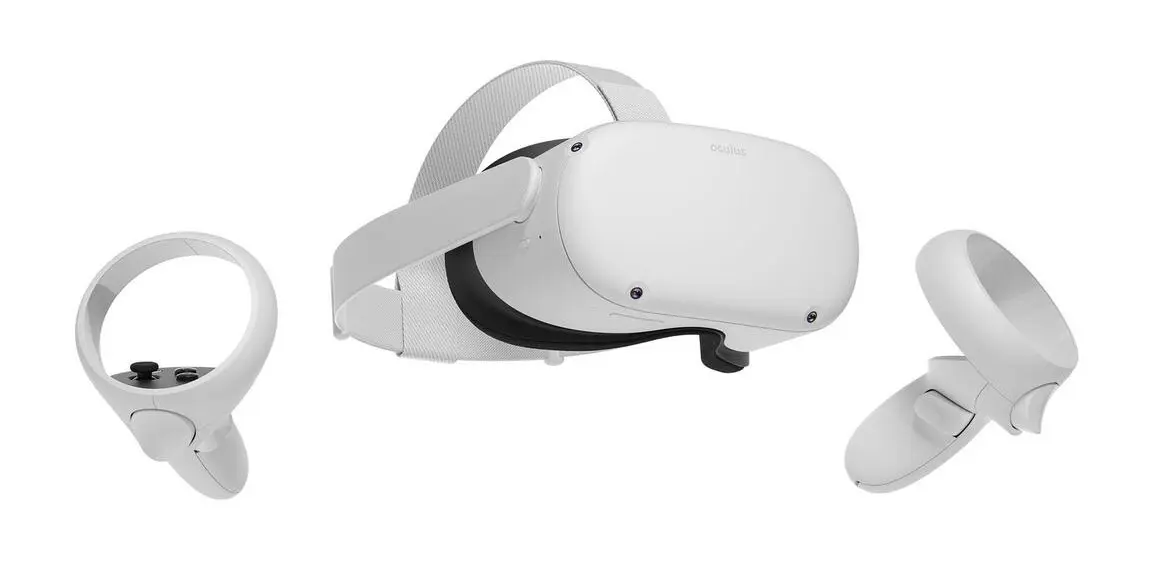
Multiplayer, voice and chat run on Photon Realtime Networking (PUN), which also connects to external APIs and databases. The platform was designed to handle more than 1,000 concurrent users, and the same project can be adapted for VR headsets like Oculus.